A Small-Space Mobility and Stretching Routine That Fits on One Mat
Published How we research
A full mobility and stretching routine fits on one yoga mat, roughly 2 by 6 feet of floor, and takes 10 to 15 minutes. Do five slow mobility drills first, then five static stretches held for 20 to 30 seconds per side, and repeat the routine at least three days a week. Nothing here involves jumping or dropping anything, so it is silent for the neighbors below and works at 6 am or 11 pm. The moves are standard ones found in most warm-up and cool-down plans, picked because each one stays inside the edges of a mat. A strap, two blocks and a foam roller make some positions easier, but none of them is required to start.
How much space and gear the routine needs
A standard yoga mat is about 24 inches wide and 68 inches long. Every move in this routine starts and ends inside that rectangle, so the real requirement is the mat plus enough clearance to reach one arm out to the side and overhead. In most apartments that means the strip of floor beside the bed, in front of the couch, or next to a desk. If you can lie flat with your arms at your sides without touching furniture, you have enough room.
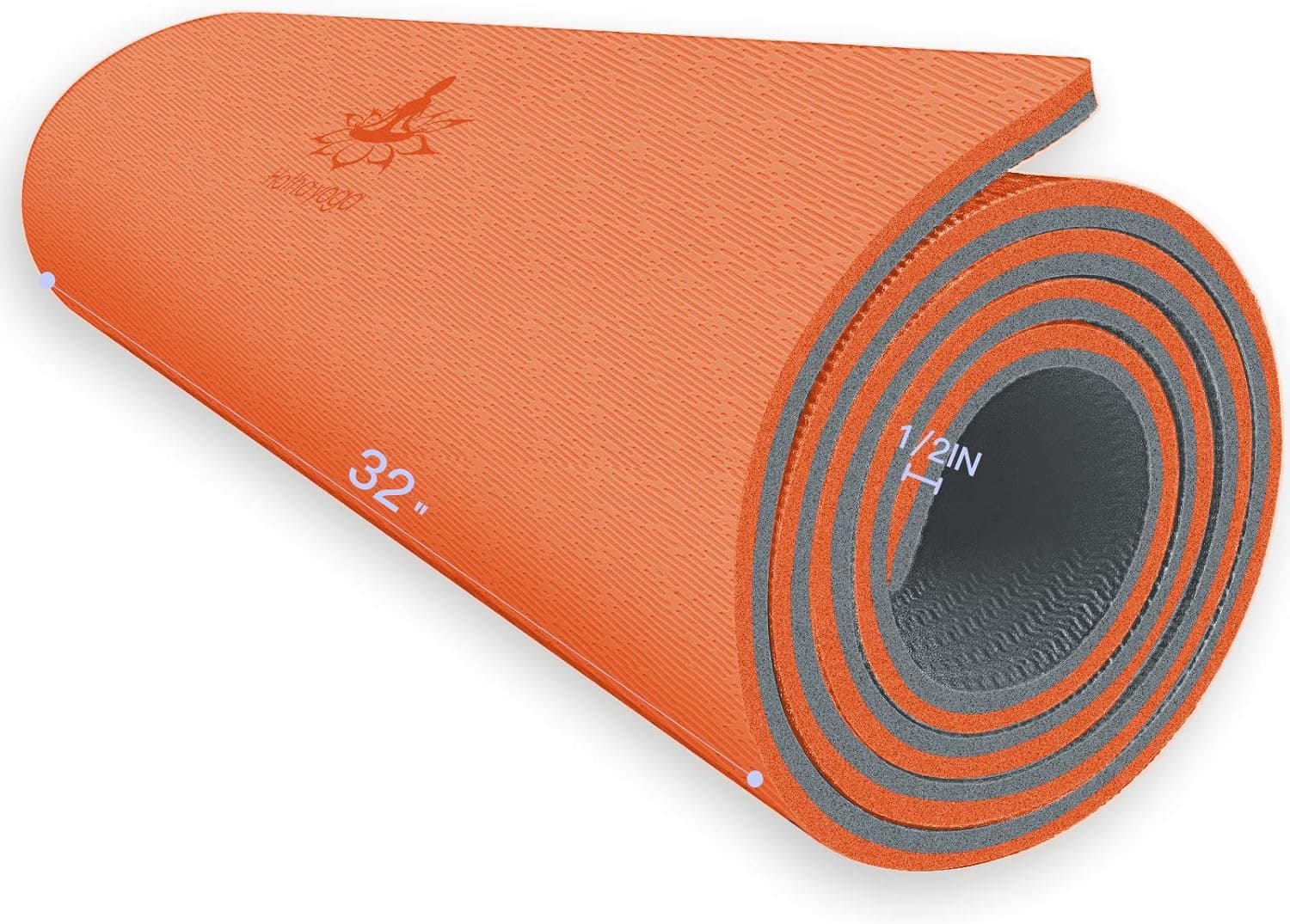
The mat matters more than it seems. Several drills put a knee on the floor, and on a thin travel mat over hardwood or tile that gets uncomfortable fast. A mat in the 6 to 10 mm range, or a folded towel under the kneeling knee, solves it. Thicker foam mats of half an inch and up are the most comfortable for kneeling but feel less stable in standing balance work, which is fine here because this routine has none. On carpet, a mat is optional, though it still helps your hands and feet grip.
Part 1: five mobility drills (about 5 minutes)
Mobility drills are slow, controlled movements through a comfortable range, with no long holds. Move at a pace where each rep takes three to four seconds and breathe normally. Start with cat-cow: on hands and knees, round your spine toward the ceiling, then let your chest sink and your tailbone lift. Do 8 to 10 slow cycles. Stay on all fours for thread the needle: slide one arm under your chest along the mat until that shoulder lowers toward the floor, then reverse and reach the same arm up toward the ceiling, following your hand with your eyes. Do 6 to 8 reps per side.
Next, sit for 90/90 hip switches. Bend both knees to roughly 90 degrees with one shin in front of you and one out to the side, then rotate both knees over to the other side without moving your feet from their spots. Use your hands behind you for support at first. Do 8 to 10 switches in total. Then take a half-kneeling stance for ankle rocks: with your front foot flat, push that knee forward over your toes while the heel stays down, pause for a second, and return. Do 10 per side.
Finish part 1 with a deep squat hold. Stand with feet about shoulder width apart, toes turned out slightly, and lower into the deepest squat you can hold with your heels on the floor. Stay there for 30 to 60 seconds, shifting your weight gently from side to side. If your heels lift or you tip backward, hold a door frame or the edge of a counter for balance, or sit your hips onto a yoga block or a thick book. The depth usually improves over a few weeks of regular practice.
Part 2: five static stretches (about 6 minutes)
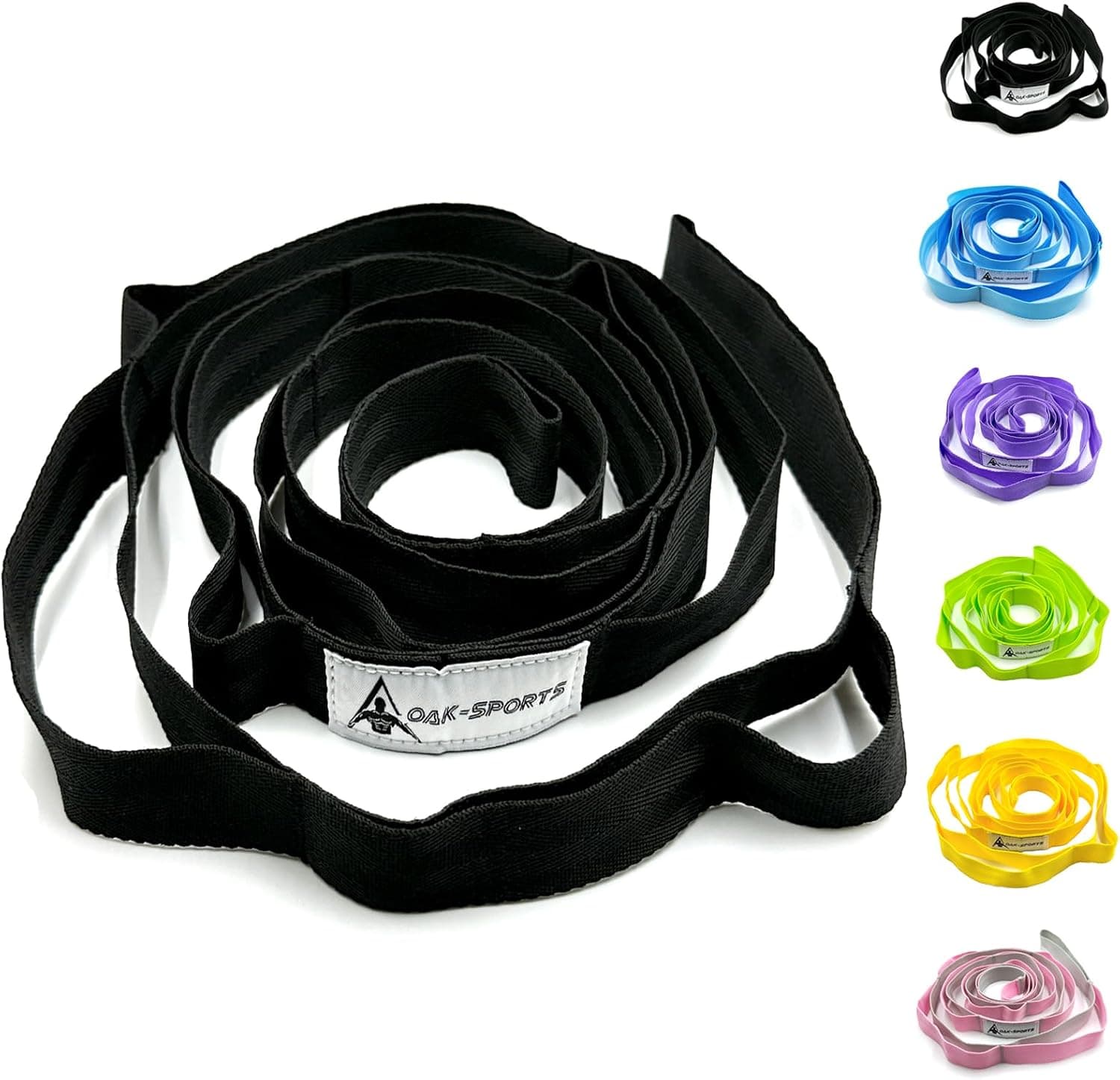
Static stretches are held positions. Ease into each one until you feel mild to moderate tension, hold it for 20 to 30 seconds while breathing slowly, and do not bounce. First, the half-kneeling hip flexor stretch: kneel on one knee with the other foot forward, tuck your pelvis under slightly, and shift your hips forward until you feel the front of the kneeling hip. Second, the lying hamstring stretch: on your back, raise one leg toward the ceiling with the knee nearly straight, keeping the other leg on the mat. Loop a strap, belt or towel around the raised foot if you cannot reach it comfortably.
Third, the figure-four stretch for the glutes: still on your back, cross one ankle over the opposite knee and draw both legs toward your chest. Fourth, child's pose: from kneeling, sit your hips back toward your heels and reach your arms forward along the mat, then walk both hands to one side for 15 seconds and to the other for 15 seconds to bring in the muscles along your sides. Fifth, the doorway chest stretch: stand in a door frame, place one forearm on the frame with the elbow at about shoulder height, and turn your body gently away from that arm. Do each one-sided stretch on both sides.
One pass through all five takes about five to six minutes. If you have more time, repeat the two that feel tightest. A common general guideline is to accumulate about 60 seconds of stretching per muscle group in a session, so two rounds of 30 seconds does the job.
Use blocks and a strap to make positions reachable
Props do not make a stretch more advanced. They bring the floor closer so you can relax into a position instead of straining to hold it. In the hip flexor stretch, a block under each hand keeps your torso upright. In the deep squat, sitting on one or two stacked blocks lets you spend time in the position before your ankles and hips allow full depth. In 90/90, a block under the hip of the front leg levels your pelvis if that side floats off the floor.
A stretching strap with loops along its length does one thing a towel cannot: it lets you set the same hand position every session, so you can tell whether your hamstring stretch is getting easier. Foam blocks are light and quiet when they tip over, which matters on a hard floor above another apartment. Cork blocks are heavier and firmer, which feels more stable under body weight. Both store on a bookshelf.
Optional add-ons: foam roller and massage ball
If you own a foam roller, two extras fit the same mat. For upper back extension, lie with the roller across your back just below the shoulder blades, support your head with your hands, and gently lean back over it for 5 to 8 slow reps, then move it an inch or two higher and repeat. For calves, sit with one calf on the roller and roll slowly from ankle to below the knee for 30 to 60 seconds per leg. An 18 inch roller is long enough for both and stores upright in a closet corner.
A massage ball covers smaller areas. Stand with the ball between your upper back and a wall and move slowly up, down and side to side, or roll the sole of one foot over it while standing next to something you can hold. Keep the pressure at a level where you can still breathe and relax. Rolling is not required for the routine to work; treat it as a two-minute extra on days when you have the time.
When to do it: before training, after, or on its own
Before a workout, do part 1 only. The five mobility drills raise your temperature a little and take your hips, ankles, spine and shoulders through the ranges you are about to use, which is the job of a warm-up. Long static holds are usually saved for afterward, because holding a stretch for a minute or more right before heavy lifting can slightly reduce strength for a short time. Short holds are not a concern, but there is no need to add them before training.
After a workout, or on a rest day, do both parts back to back. On rest days, walk around the apartment or do a minute of easy marching in place first so you are not stretching completely cold. The routine also works as a break from sitting: cat-cow, thread the needle and the doorway chest stretch take under three minutes together and need no change of clothes.
Frequency matters more than session length. Two or three sessions a week is a reasonable minimum, and a short daily session is fine because nothing here is strenuous. Flexibility changes slowly, so expect to notice a difference over several weeks, not several days. Keep the mat, strap and blocks together in one basket or on one shelf so setup takes ten seconds.
Frequently asked questions
How long should I hold each stretch? Hold static stretches for 20 to 30 seconds and repeat until you reach about 60 seconds in total for each muscle group. Longer holds are not harmful, but they add little for general flexibility and make the routine harder to stick with.
Should I stretch before or after a workout? Use slow mobility drills before training and keep the longer static holds for after the session or for a separate time of day. Both parts together work well on rest days after a minute or two of easy movement.
Do I need equipment for a mobility routine? No. A mat or a carpeted floor is enough. A strap and two blocks make the hamstring stretch, the lunge and the deep squat easier to hold, and a belt, a towel or a couple of thick books can stand in for them at first.
How should a stretch feel? Mild to moderate tension that eases a little as you hold it. Sharp pain, pinching in a joint, numbness or tingling are signs to back out of the position. If you are returning from an injury or a movement hurts every time, get advice from a qualified professional before continuing.
Products from this article
The highest-scoring picks from the buying guides mentioned above. Scores are our editorial assessment, not customer ratings.
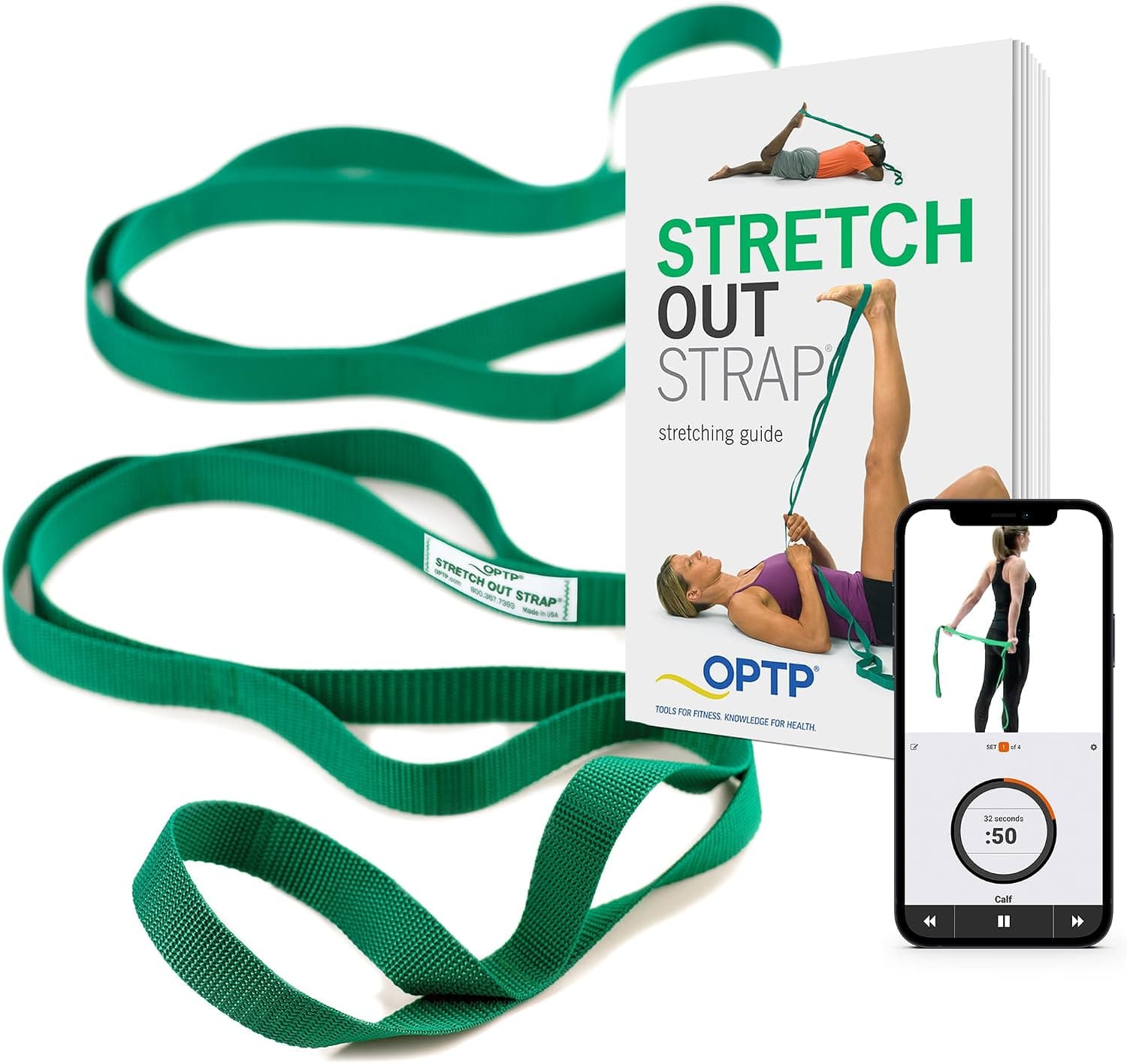
+ Exercise book shows clear stretches, which helps beginners
From our guide: Best Stretching Straps for Flexibility at Home (2026 Guide)
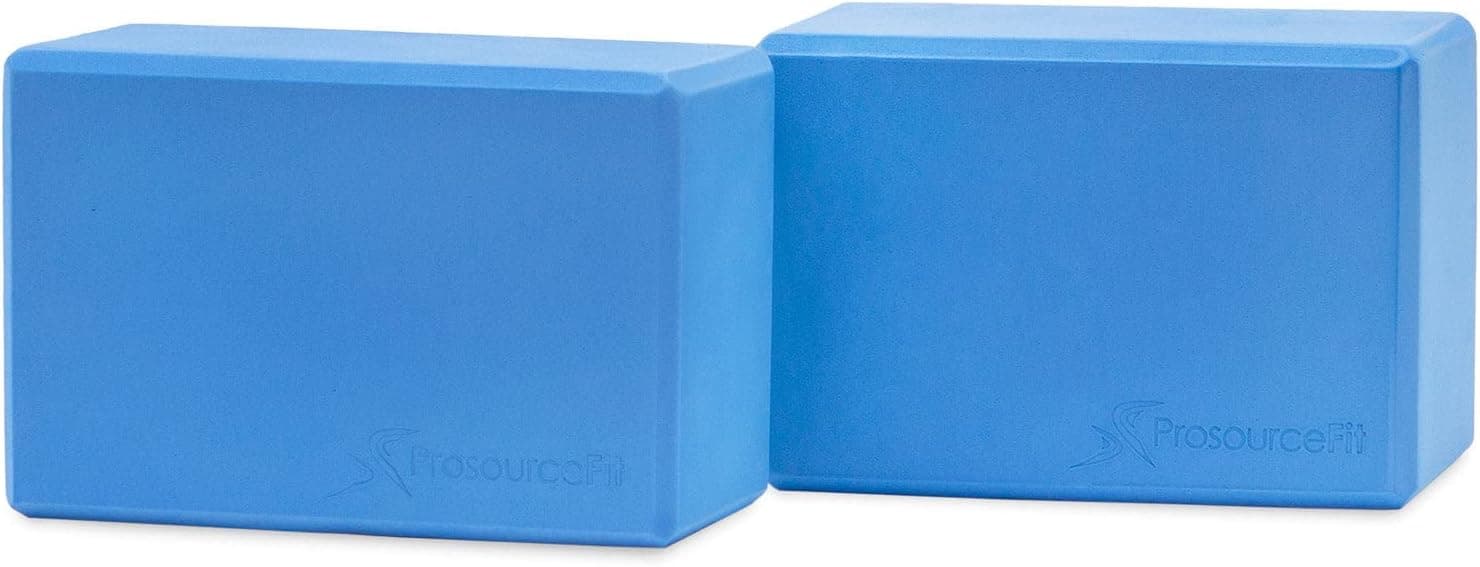
+ 4 x 6 x 9 sizing is a common, versatile yoga block size
From our guide: Best Yoga Blocks for Home Practice (2026 Guide)
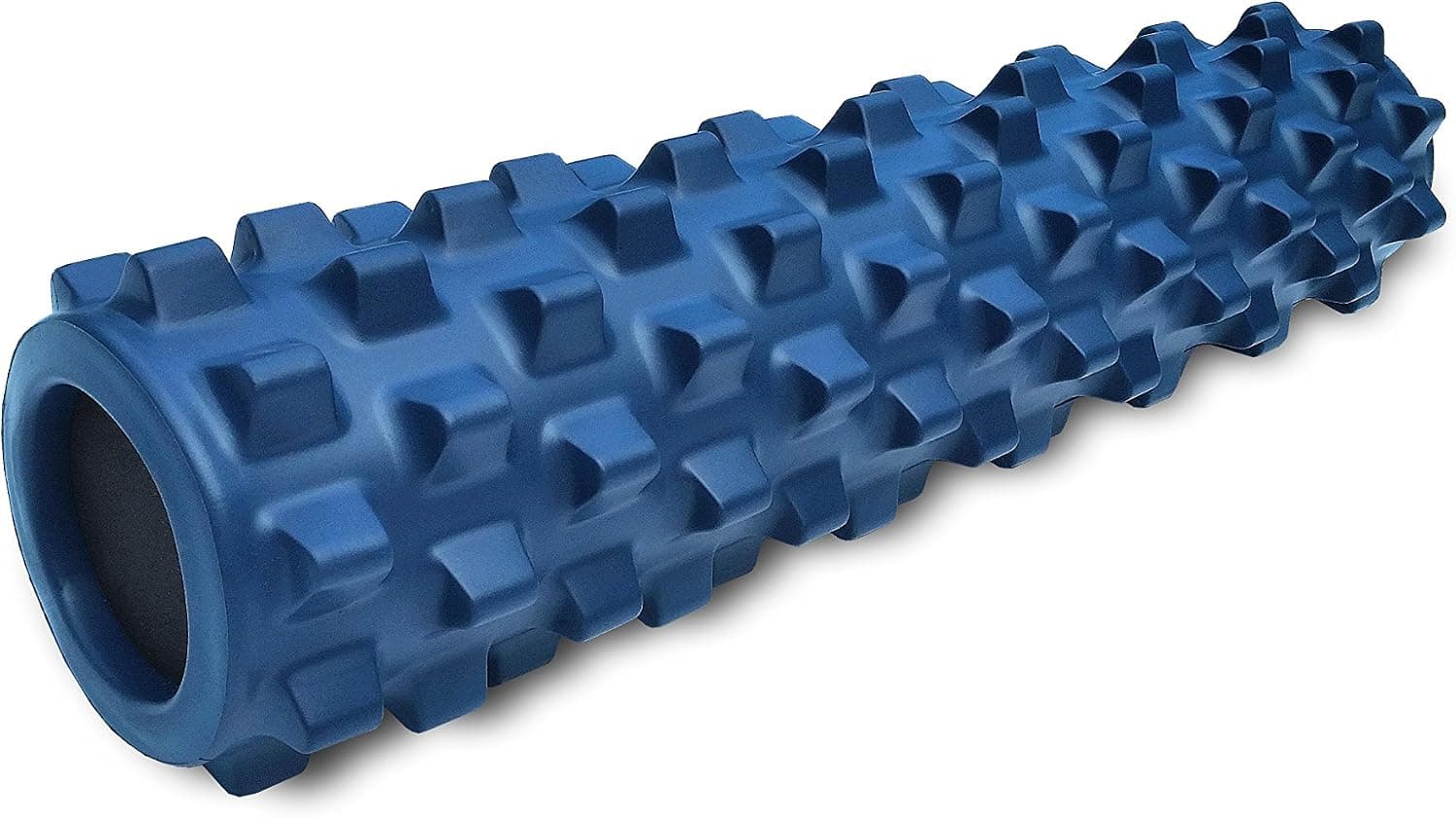
+ Firm bumps mimic a massage therapist's thumbs on knots
From our guide: Best Foam Rollers
+ 1/2 Inch thickness protects knees and hips on hard floors
From our guide: Best Thick Yoga Mats
Popular right now
- Noise-Reducing Flooring for a Home GymArticle
- Best Landmine Attachments for Compact Gyms (2026 Guide)Buying guide
- A Full-Body Workout in Two Square FeetArticle
- Best Push-Up Bars for Small-Space Workouts (2026 Guide)Buying guide
- Best Compact Functional Trainers for Home Gyms (2026 Guide)Buying guide
- Under-Desk Ellipticals and BikesBuying guide
Based on the last 28 days of search and visitor data.