Protecting Your Floor From Weights and Dropped Dumbbells
As an Amazon Associate I earn from qualifying purchases.
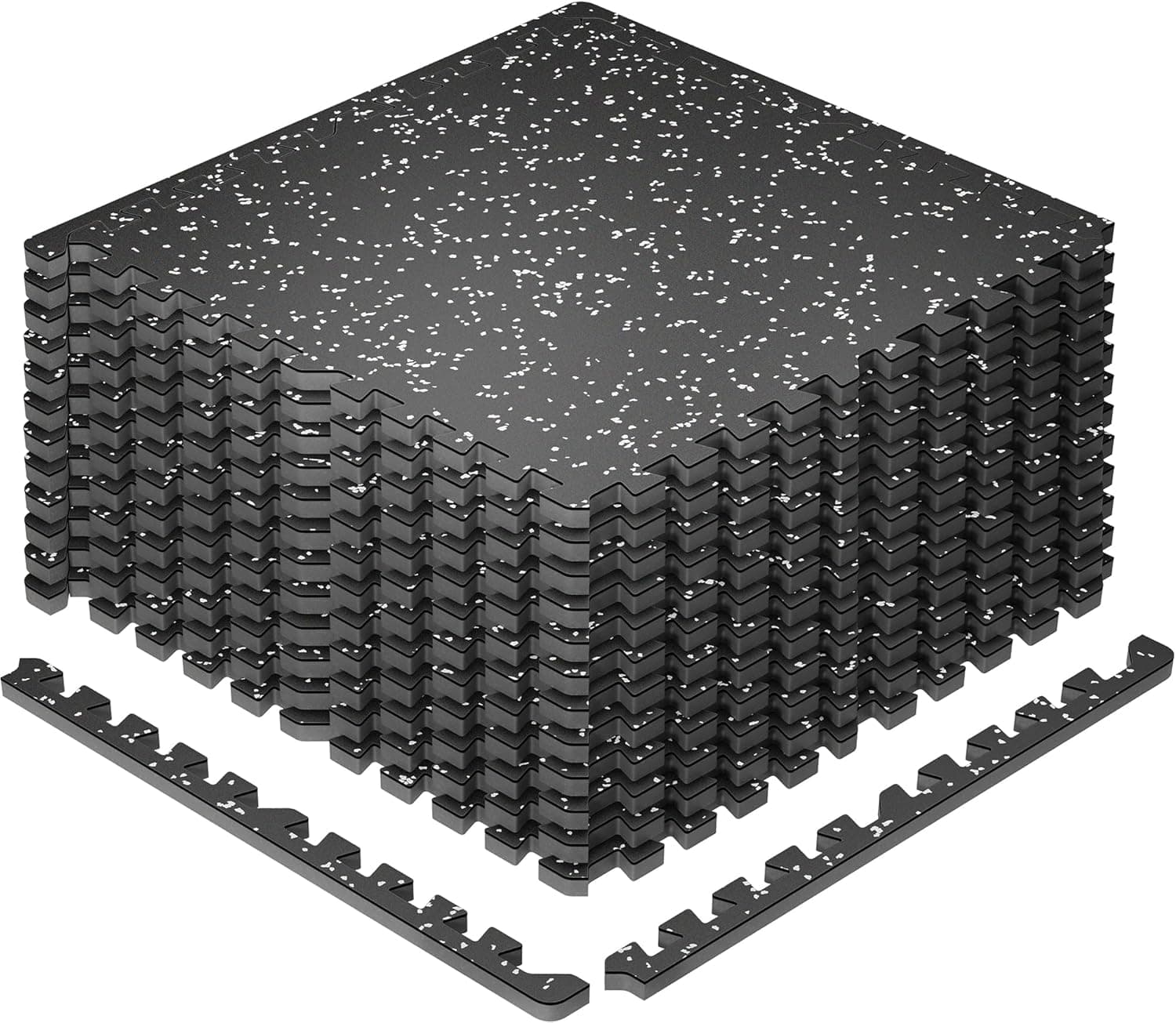
You are protecting against three things: static load from heavy equipment, impact from falling weight, and abrasion from dragging gear. A layered floor handles all three: a large rubber mat or foam tiles across the zone, a thicker drop pad where weights land, and felt or rubber pads under bench and rack feet. The cheapest protection of all is the habit of never dropping a weight and never dragging loaded equipment. Renters should use only loose-laid, fully removable protection. A dropped dumbbell does not care whether you own the apartment or rent it. Hardwood dents, laminate cracks, tile chips, and carpet crushes flat under concentrated point loads. If you are building a gym at home, protecting the floor is not an afterthought, it is part of the equipment budget, and doing it properly costs far less than repairing the damage or losing a rental deposit.
Three threats: static load, impact, abrasion
Understand what you are protecting against first. There are three distinct threats: static load from heavy equipment sitting in one place, impact from a weight that falls, and abrasion from dragging gear across the surface. Each needs a slightly different defense, and a good floor setup handles all three at once. Static load is spread by any firm mat; impact needs thickness and density to absorb energy; abrasion needs a smooth barrier between metal and floor.
A layered approach for apartment gyms
For most apartment gyms, a layered approach works best. The bottom layer is a large rubber mat or a set of interlocking foam tiles that covers your whole training zone and protects against scratches and general wear. On top of that, in the spot where weights actually land, add a second thicker pad, sometimes called a drop pad or a horse stall mat. This two-layer system means the everyday area is comfortable and the impact zone is genuinely protected.
Material choice: rubber vs EVA foam
Material choice matters. Dense rubber is the gold standard for impact because it absorbs energy without bottoming out, but it is heavy and has a smell when new. High-density EVA foam tiles are lighter, cheaper, and cleaner smelling, and they are excellent for bodyweight work and light dumbbells, though very heavy drops can compress them fully. For a compact setup with adjustable dumbbells rather than a loaded barbell, quality foam tiles plus good habits are usually enough.
Habits are the cheapest floor protection
Habits are the cheapest floor protection of all. The single most damaging thing you can do is let weights fall, so make controlled lowering a non-negotiable rule. Set dumbbells down rather than dropping them, rest them on a bench between sets instead of the floor, and never drag loaded equipment across the surface. A person who never drops a weight barely needs a drop pad at all, while a person who drops constantly will eventually damage any floor.
Do not forget the feet of your equipment
Pay attention to the feet of your equipment too. Benches, racks, and cardio machines concentrate their entire weight onto a few small contact points, which can dent flooring even without any dropping. Stick felt or rubber pads under each foot, or set the whole machine on a mat, so the load spreads out. This also stops equipment from sliding and scratching when you move on it.
If you rent: document and use removable protection
If you rent, document the floor before you build and choose fully removable protection so you can restore the room to its original state. Interlocking tiles and loose mats leave no marks, unlike anything you would glue or screw down. When you move out, the floor underneath should look exactly as it did on day one, which protects both your deposit and your relationship with the landlord. Good floor protection is quiet insurance: you never notice it working, but you would very much notice its absence.
Frequently asked questions
How do I protect hardwood floors from home-gym weights? Layer protection: a rubber mat or foam tiles across the training area, a thicker drop pad where weights land, and felt or rubber pads under equipment feet. Never drop or drag weights.
Do I need a drop pad if I use adjustable dumbbells? If you always lower them under control, barely. Quality foam tiles plus the habit of never dropping are usually enough for a compact dumbbell setup.
Why is my bench denting the floor even though I never drop weights? Benches and racks concentrate their whole weight onto a few small feet. Stick felt or rubber pads under each foot or set the machine on a mat to spread the load.
What floor protection is safe for a rental? Interlocking tiles and loose-laid mats, which leave no marks, unlike anything glued or screwed down. Document the floor's condition before you build.