Best Home Gym Flooring
As an Amazon Associate I earn from qualifying purchases.
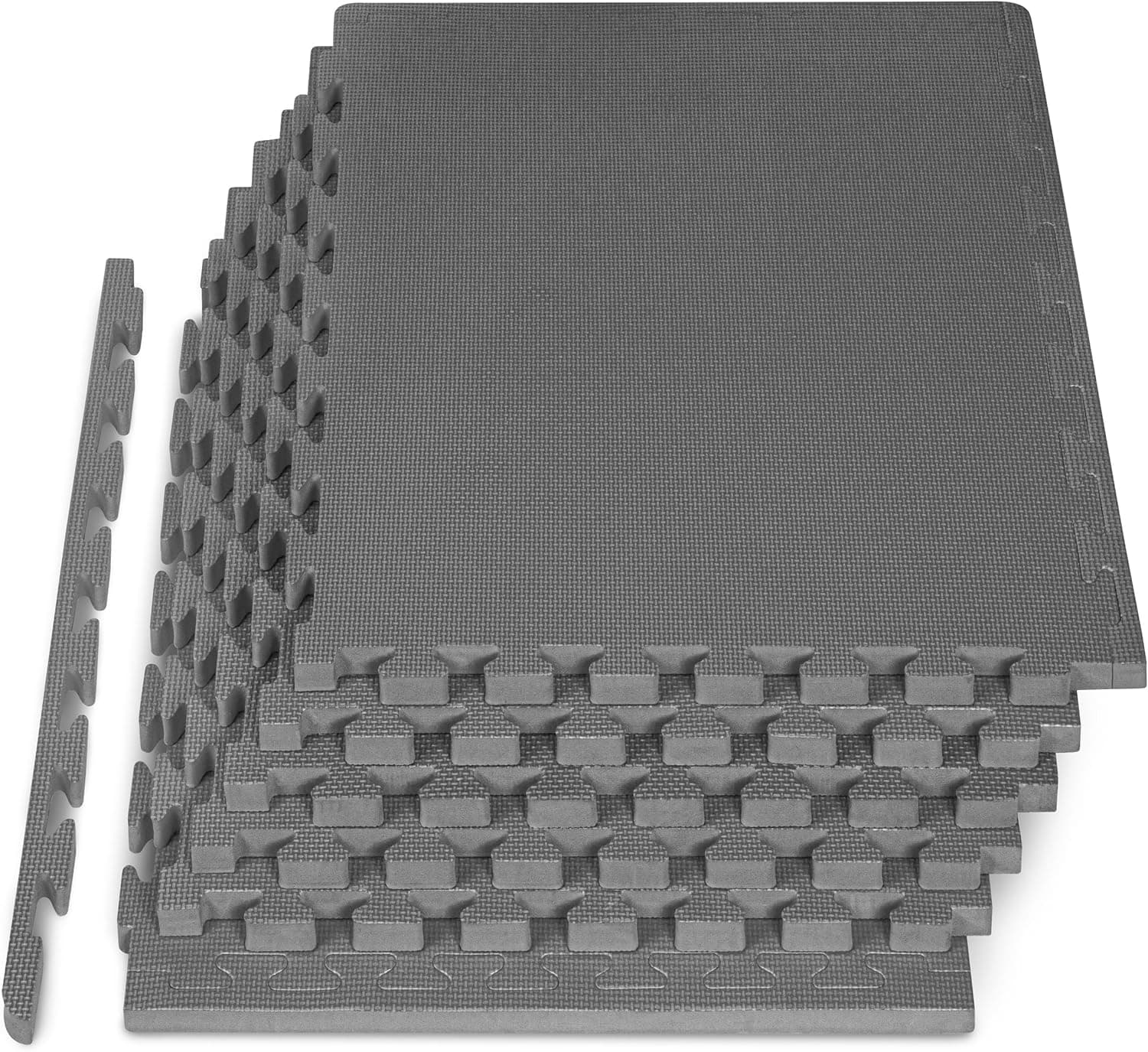
Gym flooring is chosen by what you intend to drop on it. If weights are involved, rubber-topped tiles are the only honest answer: a rubber surface around 0.5 to 0.8 inches thick absorbs the shock of a dumbbell without denting, deadens the noise that travels to the room below, and shrugs off the point loading from a rack or bench foot. EVA foam puzzle tiles are a different product for a different job. They are light, cheap, warm underfoot, and excellent for bodyweight training, yoga, and floor work, but a dropped kettlebell leaves a permanent crater and a bench leg will slowly punch through. Coverage is where budgets go wrong, so measure your actual training footprint rather than the room: most people need less than they think, and 48 to 60 square feet covers a single-station setup with room to lie down. Buy tiles in one batch and one colour lot, since dye varies between production runs. Two details are worth checking before you order. First, whether the set includes border strips, because raw puzzle edges curl and catch toes. Second, what is underneath, as rubber can stain vinyl and light-coloured laminate over time and is best laid over a thin moisture barrier. Interlocking tiles let you expand later, which is the real advantage over a single mat.
SUPERJARE 0.79in Extra-Thick Rubber Top Exercise Equipment Mats, 12 Pcs
A floor-protection pick chosen for small-space training.
Yes4All EVA Interlocking Puzzle Floor Tiles, Foam Floor Padding
A floor-protection pick chosen for small-space training.
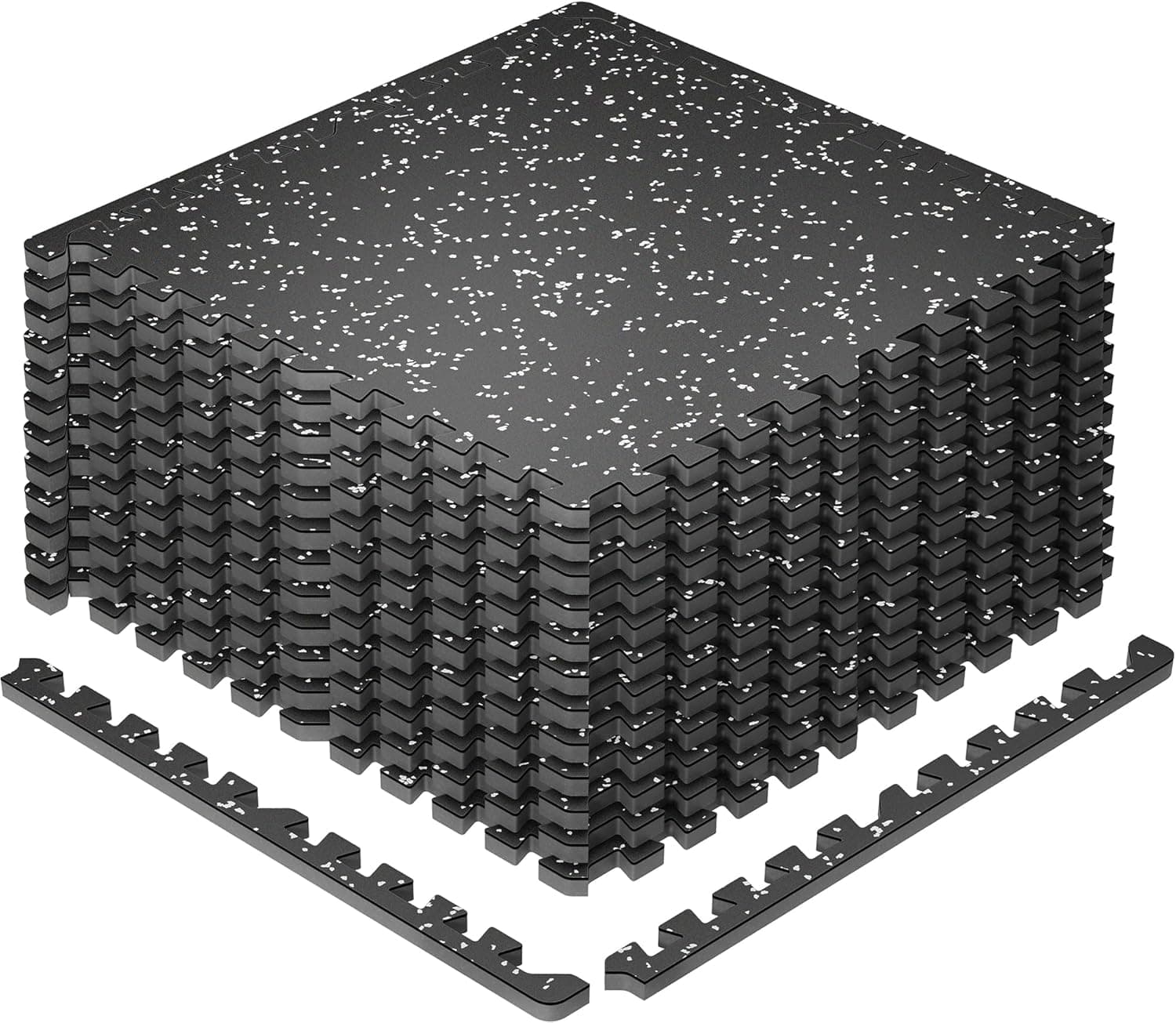 #1
#1A floor-protection pick chosen for small-space training.
- + Protects floors and joints
- + Cuts impact noise for neighbors
- + Grippy, stable training surface
- - Thicker mats add storage bulk
- - Let new rubber air out at first
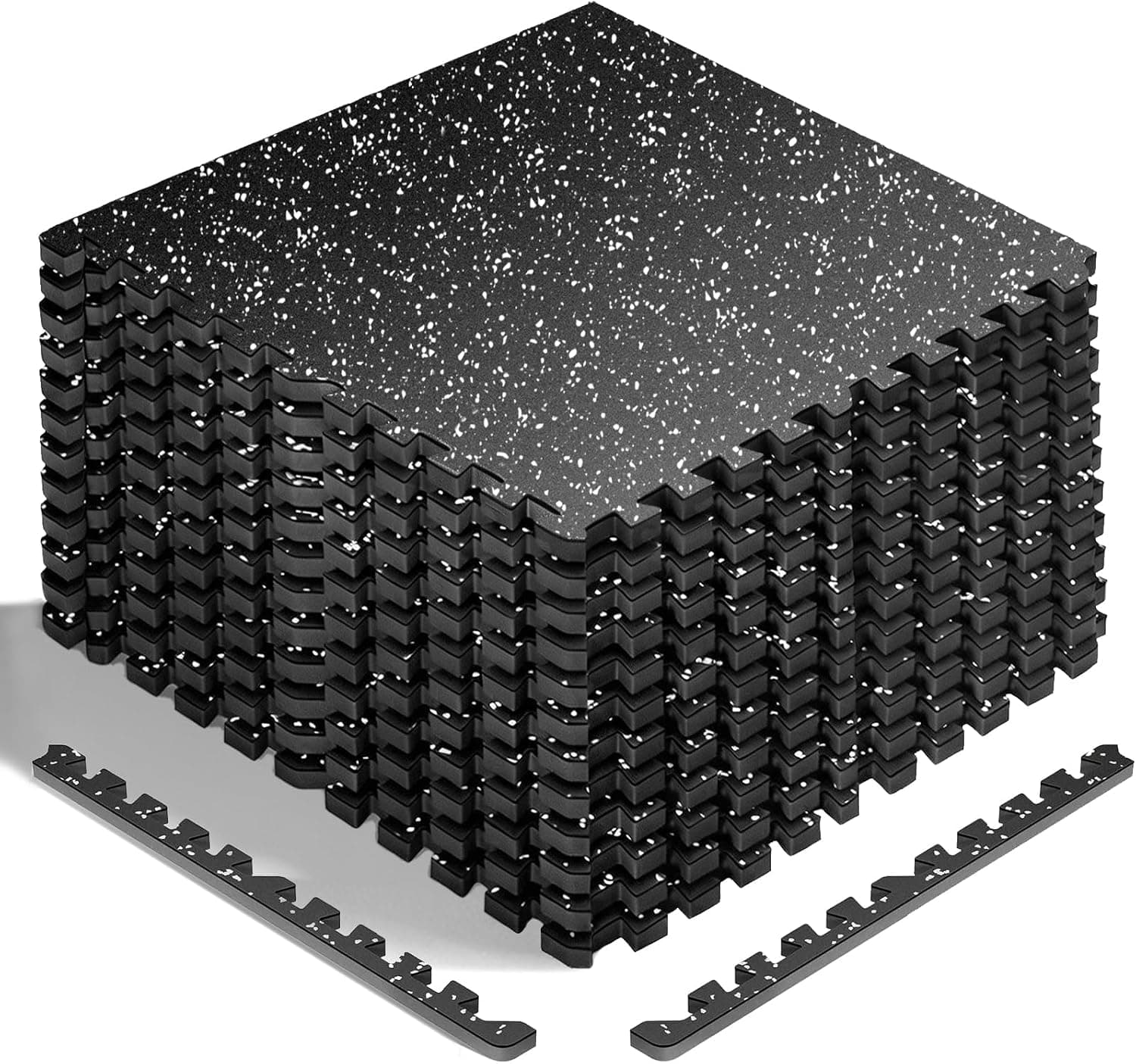 #2
#2A floor-protection pick chosen for small-space training.
- + Protects floors and joints
- + Cuts impact noise for neighbors
- + Grippy, stable training surface
- - Thicker mats add storage bulk
- - Let new rubber air out at first
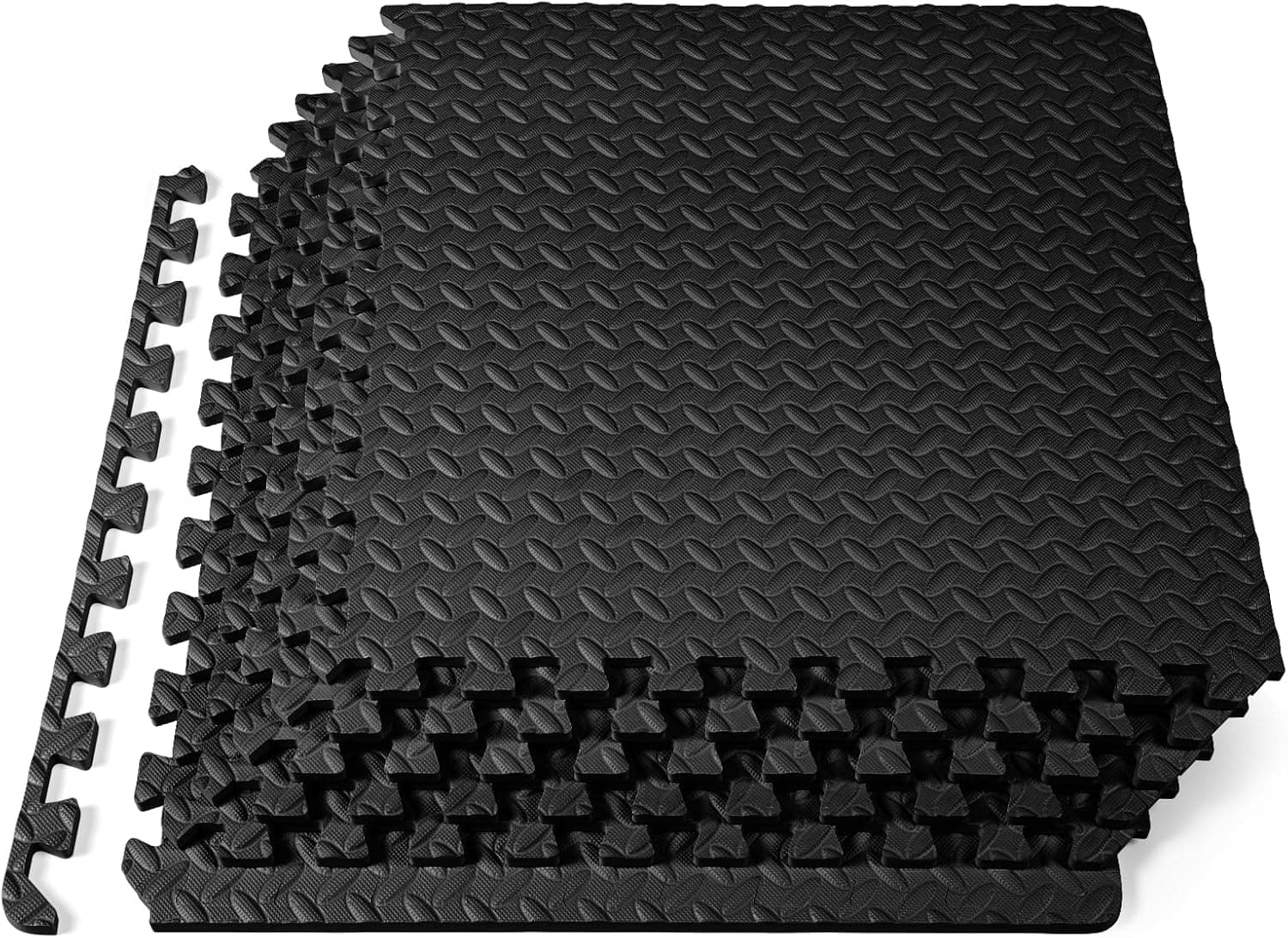 #3
#3A floor-protection pick chosen for small-space training.
- + Protects floors and joints
- + Cuts impact noise for neighbors
- + Grippy, stable training surface
- - Thicker mats add storage bulk
- - Let new rubber air out at first
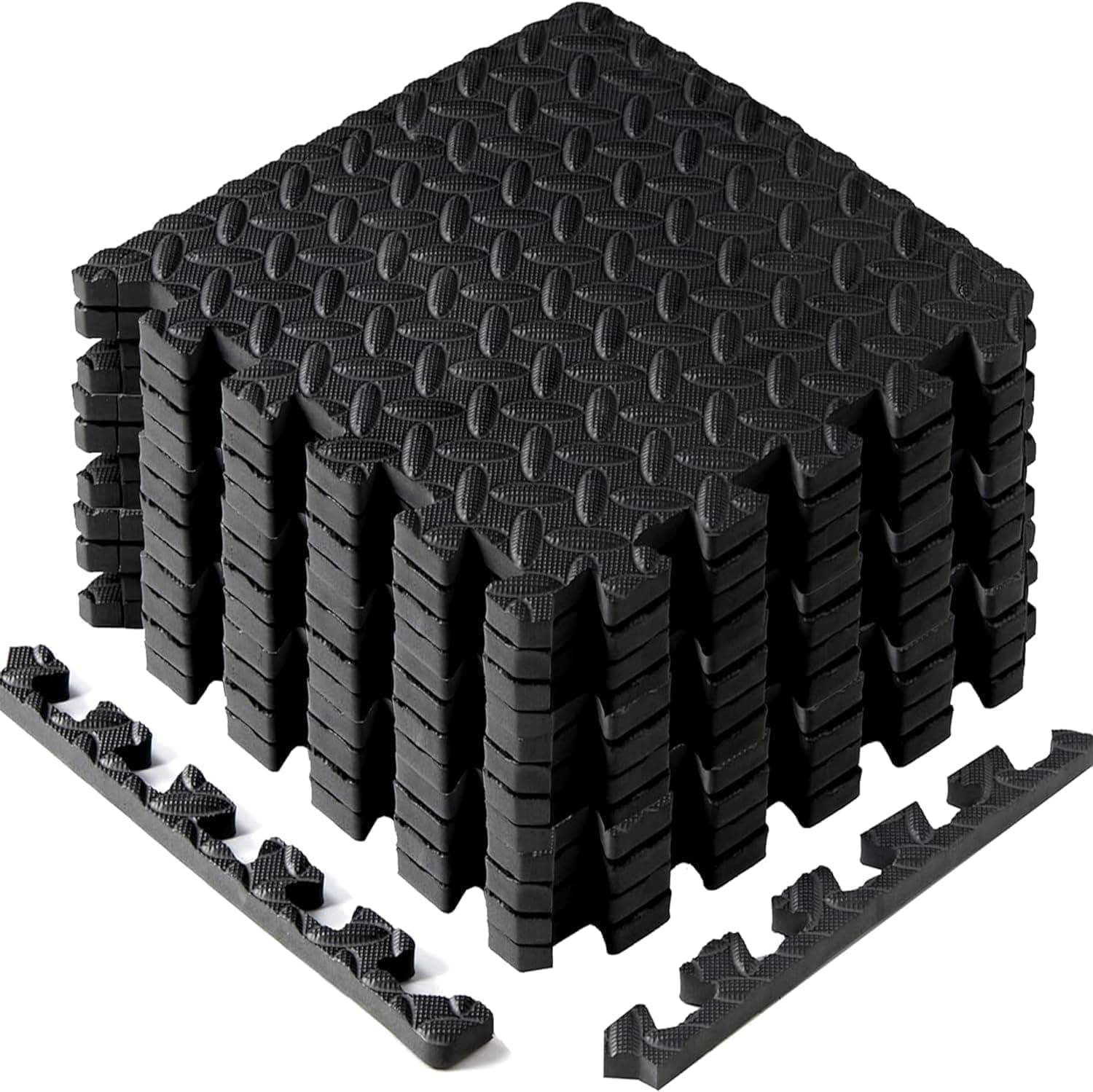 #4
#4A floor-protection pick chosen for small-space training.
- + Protects floors and joints
- + Cuts impact noise for neighbors
- + Grippy, stable training surface
- - Thicker mats add storage bulk
- - Let new rubber air out at first
 #5
#5A floor-protection pick chosen for small-space training.
- + Protects floors and joints
- + Cuts impact noise for neighbors
- + Grippy, stable training surface
- - Thicker mats add storage bulk
- - Let new rubber air out at first
Frequently asked questions
›What is the best choice among home gym flooring?
SUPERJARE 0.79in Extra-Thick Rubber Top Exercise Equipment Mats, 12 Pcs is our top overall pick. A floor-protection pick chosen for small-space training.
›What is a good budget option?
Yes4All EVA Interlocking Puzzle Floor Tiles, Foam Floor Padding is the strongest low-cost pick in this guide. A floor-protection pick chosen for small-space training.
›How much should I expect to spend?
Picks in this guide span $ to $$ to $$$ price bands (roughly: $ = under $30, $$ = $30–100, $$$ = over $100). We never display exact prices because they change constantly — the buttons above always show Amazon's current price.
›How were these products chosen?
Every product in this guide was individually researched on Amazon: we verify the exact listing, compare owner ratings and review volume, and write the pros and cons ourselves with small apartments and renters in mind. We earn a commission if you buy through our links, which never affects the ranking.
Last updated for 2026. Compact Gym Picks independently selects every product; we may earn a commission from links above.