HAPBEAR 0.56in Thick 12 Pcs 48 Sq Ft High-Density Rubber Top Gym Tiles Review (2026)
Updated September 14, 2026 · Research-based review
Our verdict
HAPBEAR's interlocking gym tiles combine a rubber top with EVA foam across 12 pieces, covering 48 square feet at just over half an inch thick. The rubber surface gives real grip and shock absorption, though it is thinner than mats built for heavy weight drops. Our score of 8.6 out of 10 puts it first in the flooring guide.
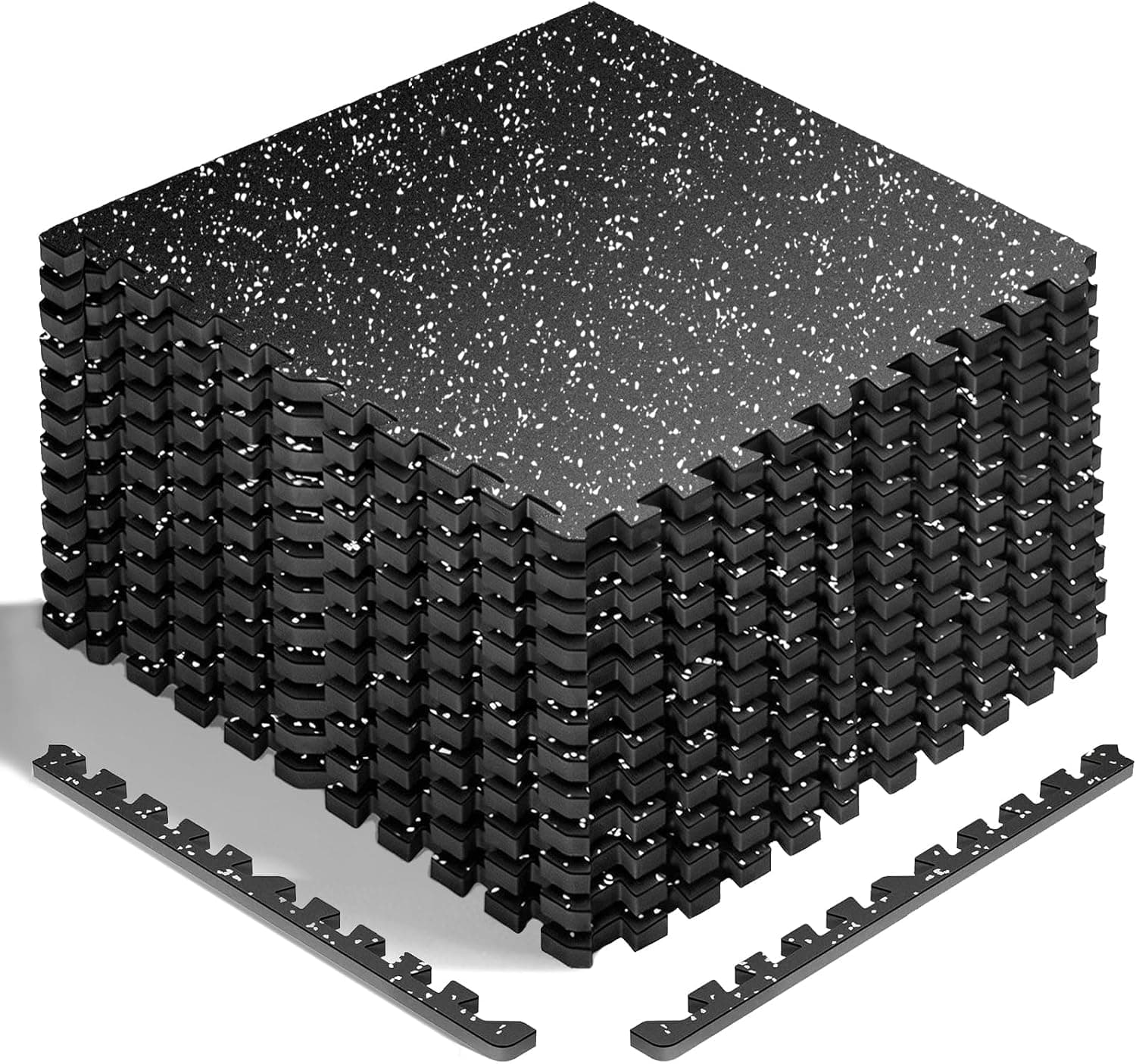
HAPBEAR's 0.56in thick high-density rubber top gym tiles, 12 Pcs covering 48 Sq Ft of floor space.
Price range: $$ (Mid-range)
What we liked
- + 48 Sq Ft coverage suits a compact home gym area
- + High-density rubber top protects floors from equipment
- + Interlocking tiles install quickly without adhesive
Trade-offs
- - Thinner than extra-thick mats for heavy weight drops
- - Tile edges may need trimming to fit irregular rooms
Who this flooring suits
These tiles fit anyone setting up a dedicated workout corner, garage gym or home fitness room who needs to protect a hard floor from dumbbells, kettlebells, treadmills or general foot traffic without covering an entire room in one giant mat. Twelve 24 by 24 inch tiles covering 48 square feet is enough for a compact home gym area, a treadmill footprint plus some open floor space, or a section of a garage used for training. Because the tiles interlock, the coverage shape is flexible, so you can build a rectangle, an L shape around existing furniture, or a layout that fits around permanently placed equipment. Anyone flooring an entire basement or a large dedicated gym room will likely need to buy additional sets to extend coverage beyond the base 48 square feet.
Material and thickness explained
Each tile combines a dense, textured rubber top layer with an EVA foam base underneath, so the rubber surface handles grip and wear from equipment while the foam layer underneath absorbs shock and reduces strain on joints during standing or floor work. At 0.56 inches thick, these tiles sit in the middle ground between thin foam puzzle mats and extra thick rubber mats built for heavy weight dropping, which makes them well suited to bodyweight training, light to moderate dumbbell work, cardio equipment and general gym traffic rather than serious barbell drops. The interlocking edge design lets tiles connect without adhesive or tape, and manufacturer product listings describe the rubber surface as free of the strong odor sometimes associated with rubber flooring.
Installing and living with the tiles
Because the tiles interlock without adhesive, installation is largely a matter of laying pieces out in your chosen footprint and pressing the edges together, which makes rearranging or removing the flooring later straightforward compared with glued down flooring. Trimming may be needed along walls or around fixed obstacles in irregularly shaped rooms, since the interlocking system is built around square tile units. For care, sweeping or vacuuming regularly keeps grit from working into the interlocking seams, and the rubber top wipes clean with a damp cloth for sweat or dust. Placing equipment like treadmills or weight racks toward the center of a tiled section, away from the outer interlocking edges, helps keep the seams from separating under repeated heavy loads.
How it compares with other gym flooring
In the site's home gym flooring guide, these HAPBEAR tiles rank first of five, ahead of SUPERJARE's 0.79 inch extra thick rubber top mats, which score 8.4 and trade some of this set's value for extra cushioning aimed at heavier weight drops. The ProsourceFit EVA foam puzzle mats, both scoring 7.8, use foam only construction without a rubber wear layer, which makes them lighter and less expensive but less durable under repeated equipment use than this rubber topped design. Compared with the thicker SUPERJARE option, these HAPBEAR tiles favor a balance of grip, shock absorption and value over maximum cushioning, which is why they edge ahead in the guide's overall ranking.
Verdict and who should choose differently
Choose these HAPBEAR tiles if you want durable, grippy rubber topped flooring for a compact home gym area, garage corner or treadmill footprint, and you value easy no adhesive installation over maximum thickness. Their combination of rubber durability, foam cushioning and flexible coverage is what earns them the top spot in the site's flooring guide. Anyone regularly dropping heavy barbells or doing serious powerlifting work should look at the thicker SUPERJARE option in the same guide instead, since extra thickness matters more for absorbing heavy impacts. For general home gym protection and comfort underfoot, these tiles remain a strong first choice.
Frequently asked questions
How much floor space do these tiles cover?
The set includes 12 tiles at 24 by 24 inches each, covering 48 square feet total, and the interlocking design lets you arrange them into different shapes to fit your space.
Are these tiles thick enough for heavy weight drops?
At 0.56 inches thick they suit bodyweight training, cardio equipment and moderate dumbbell use well, but for serious barbell drops an extra thick mat built specifically for that purpose, such as the SUPERJARE option in the same guide, offers more cushioning.
Do the tiles need glue or tape to install?
No, the tiles use an interlocking edge design that connects without adhesive, which makes installation and later rearranging or removal straightforward.
Do these tiles have a strong rubber smell?
Manufacturer product listings describe the rubber surface as free of the strong odor sometimes associated with rubber flooring, though sensitivity to new material smell can vary by person.
Prices change often, so check the current price and availability on Amazon.
Check price on AmazonCompact Gym Picks may earn a commission from the link above.