Suspension Trainer Workouts for Apartments
As an Amazon Associate I earn from qualifying purchases.
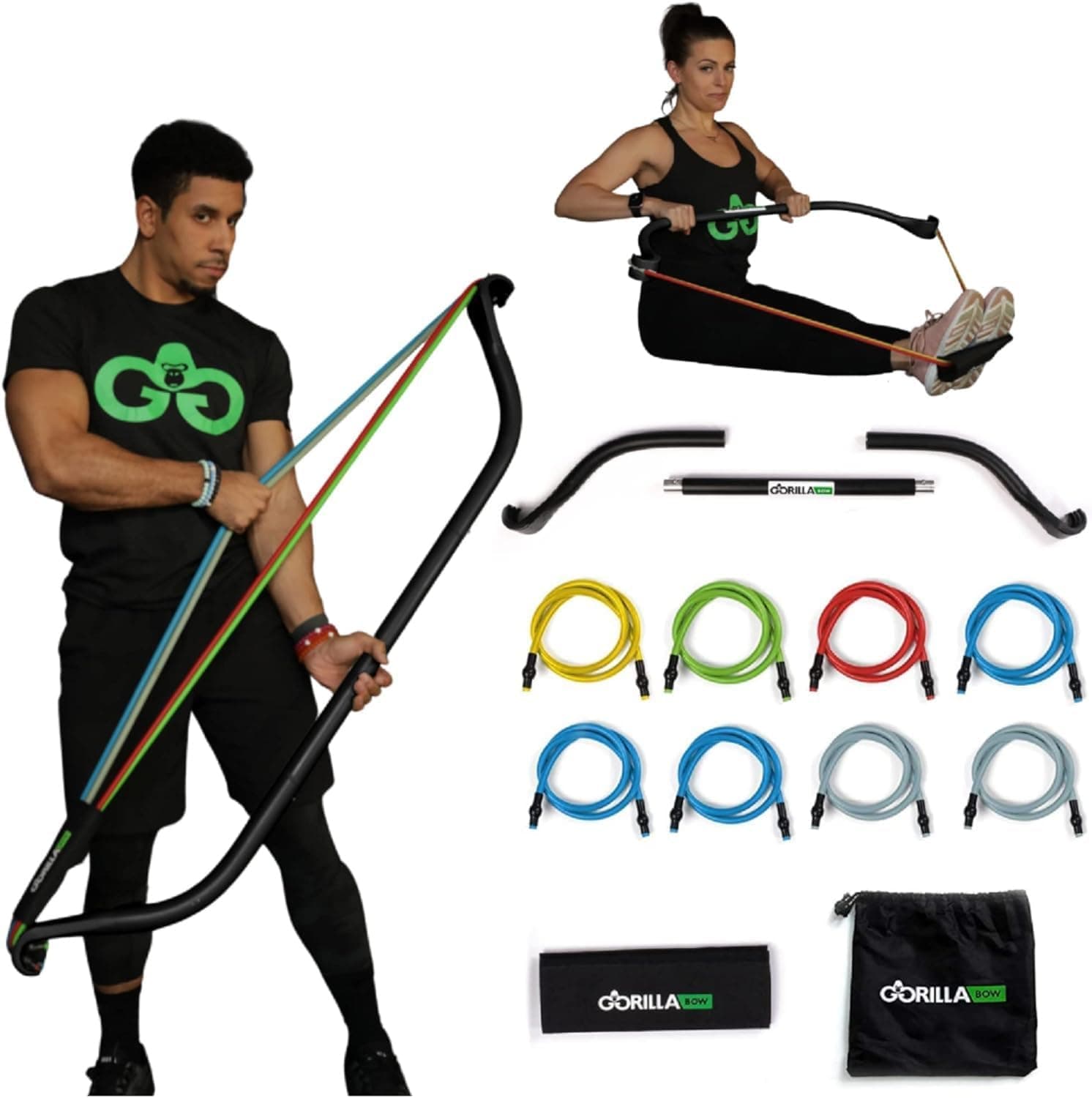
A suspension trainer is one of the most space-efficient pieces of training equipment ever made. It is essentially two adjustable straps with handles that hang from a single anchor point, using your body weight and the angle of your body to provide resistance. The entire system weighs about as much as a paperback, folds into a small bag, and turns a doorway or a ceiling anchor into a full-body gym. For apartment dwellers, it is close to ideal.
The genius of the suspension trainer is how it scales resistance without any weights at all. By changing the angle of your body relative to the anchor, you make any exercise easier or harder instantly. Stand more upright and a row becomes gentle; lean back further and it becomes brutal. This means a single device serves a complete beginner and an advanced athlete equally, and you adjust the difficulty by taking a step rather than by changing plates. That infinite, instant adjustability is perfect for a tool meant to do everything.
What a suspension trainer can train is genuinely comprehensive. You pull with rows of every angle, push with suspended push-ups and presses, work your legs with lunges and single-leg squats, and hammer your core with planks, pikes, and mountain climbers where your feet hang in the straps. Because so many movements demand that you stabilize your own body against the swaying straps, nearly every exercise becomes a core exercise too. Few tools this small train the body this completely.
The anchor point is the one thing you must get right, and in an apartment it deserves careful thought. Most suspension trainers come with a door anchor that slots over the top of a closed door, using the door itself to hold the strap, which requires no installation and is perfect for renters. The critical safety rule is that the door must open away from you, so that your pulling force presses the door closed against its frame rather than pulling it open. Used correctly on a solid door, this anchor is secure and leaves no trace.
For those who own their home or have permission, a ceiling or wall anchor bolted into a structural beam gives a more versatile overhead attachment point that allows a wider range of movements. This is a more permanent solution that opens up exercises the door anchor cannot, but it requires drilling into solid structure and is not suitable for most rentals. The door anchor covers the large majority of suspension exercises, so renters give up very little by sticking with it.
Noise and space are non-issues, which is exactly why the suspension trainer suits apartments so well. The movements are slow and controlled by nature, with no dropping, jumping, or clanging, so a downstairs neighbor hears nothing. The training happens in the small footprint directly beneath and in front of the anchor, roughly the space of a mat. When you finish, the whole system unhooks and packs into a bag that hides in a drawer, leaving no evidence that a gym was ever there.
For someone who wants the most complete training in the smallest, quietest, most portable package, a suspension trainer is hard to beat. It trains push, pull, legs, and core with infinitely adjustable resistance, sets up in seconds on a door with no damage, makes no noise, and stores in a bag. On its own or alongside a pair of dumbbells, it forms the core of a serious apartment gym that occupies, when not in use, essentially no space at all.