Doorway and Door Frame Gym Equipment Guide
As an Amazon Associate I earn from qualifying purchases.
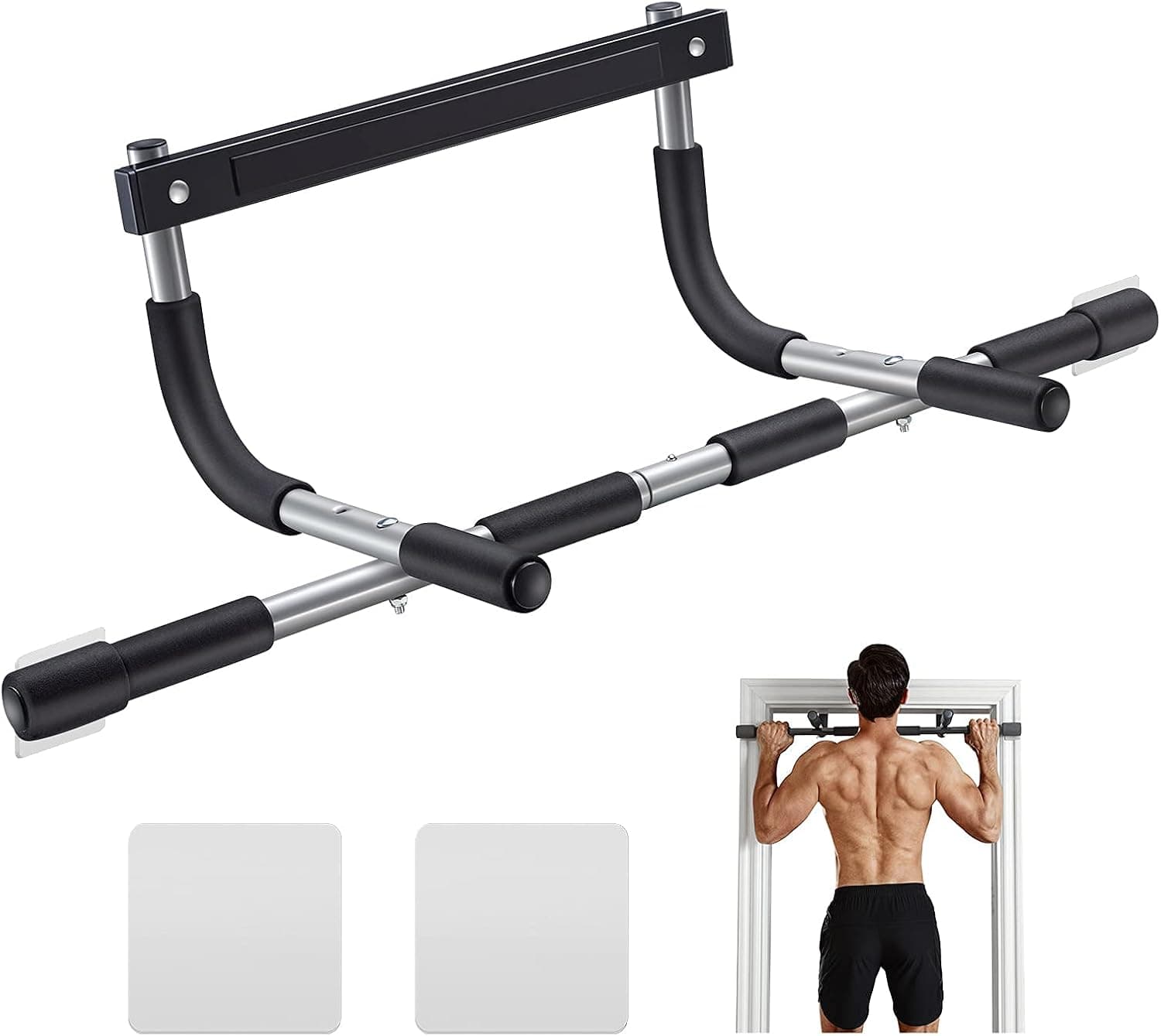
A door frame is a sturdy, built-in structure that a lot of gym equipment uses with no permanent modification: a leverage pull-up bar for vertical pulling, a suspension trainer anchored over a closed door (which must open away from you) for full-body work, and a band door anchor that turns any door into a cable machine at any height. Everything hooks, braces, or clamps and comes away clean, so it is ideal for renters. Always confirm the frame and door are solid and test with partial load first. The humble doorway is one of the most underused resources in a small home gym. A door frame is a sturdy, built-in structure that already exists in every room, and a surprising amount of training equipment is designed to use it without any permanent modification. For renters especially, learning to see doorways as gym real estate opens up pulling, pressing, and resistance training that would otherwise seem impossible in a space you cannot drill into.
The doorway is untapped gym real estate
The most familiar doorway tool is the pull-up bar that braces against the frame using leverage. These hook over the top of the door frame and press against the wall above it, so that your body weight locks the bar in place rather than pulling it free. When mounted on a solid frame, they give you a genuine pull-up station that comes down in seconds and leaves the doorway completely normal. They are the single best way for a renter to train the pulling movements that are otherwise so hard to replicate at home.
The leverage pull-up bar
Suspension trainers turn the door into an anchor for an entire full-body system. Their door anchor slips over the top of a closed door and uses the door itself to hold the straps, requiring no installation at all. The vital rule is that the door must open away from you so your pulling force presses it shut against the frame. With that one precaution observed, a single door becomes the anchor point for rows, presses, lunges, and core work, all from a device that packs into a bag afterward.
Suspension trainers turn the door into an anchor
Resistance bands and the door multiply each other's usefulness through a simple accessory called a door anchor. This is a small strap with a soft stopper on one end that you close into the door, creating a secure attachment point at whatever height you route it through. With bands anchored at the top of the door you get pulldowns; anchored low you get rows and face pulls; anchored in the middle you get presses and chest work. A few euros of anchor turns any door into a cable machine.
Band door anchors: a cable machine for a few euros
Safety is the thread running through all doorway training, and it comes down to trusting the frame and the door. Before loading any doorway device, confirm that the frame is solid, that the door is sturdy and its hinges sound, and that whatever hooks or braces against it seats fully and evenly. Test with partial load before full load, and never use a doorway device on a flimsy hollow frame or a door that shows any give. The door is doing real work, so treat it as a piece of equipment to inspect, not just a fixture.
Safety: trust the frame and the door
The great advantage of doorway equipment for renters is that it is entirely non-destructive. Nothing is drilled, screwed, or glued; every device hooks, braces, or clamps and then comes away cleanly, leaving the doorway exactly as you found it. This means you can build a capable pulling and cable station in a rental without risking a single mark on the walls or the deposit that goes with them. When you move out, the gym vanishes and the doorway is just a doorway again.
Non-destructive by design
Taken together, doorway tools cover some of the hardest gaps in a compact home gym. The pull-up bar handles vertical pulling, the suspension trainer handles full-body work, and a band anchor handles cable-style movements at any height, all from door frames you already own and none of them leaving a trace. For anyone building a gym in a small rental, learning to exploit the doorway is one of the highest-value, lowest-cost moves available.
Frequently asked questions
What gym equipment can I use on a door frame without drilling? A leverage pull-up bar, a suspension trainer with a door anchor, and a resistance-band door anchor. All hook or brace against the frame and come away leaving no marks.
Which way should the door face for a suspension trainer? The door must open away from you, so your pulling force presses it shut against the frame. Never anchor to a door that opens toward you.
How does a band door anchor work? A small strap with a soft stopper closes into the door at any height, creating a secure attachment point: high for pulldowns, low for rows, middle for presses.
Is doorway gym equipment safe on any door? No. Confirm the frame is solid, the door and hinges are sound, and whatever hooks or braces seats fully and evenly. Never use a doorway device on a flimsy hollow frame, and test with partial load first.