No-Drill Pull-Up Bars for Renters
As an Amazon Associate I earn from qualifying purchases.
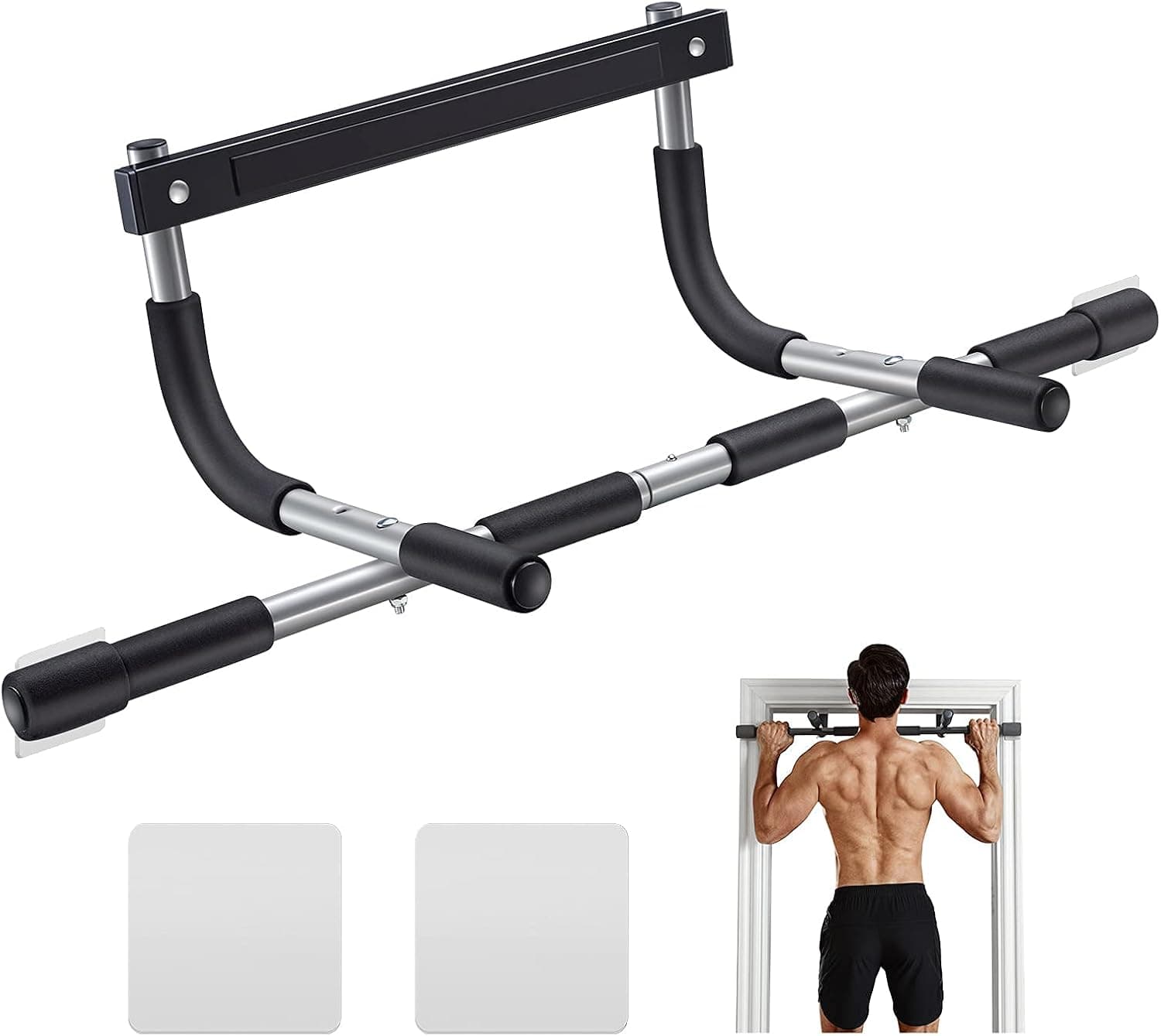
Renters can add pull-ups without drilling. A leverage doorway bar hooks over the top of the frame and presses against the wall above the door, so your body weight tightens its grip; it comes down in seconds and needs a genuinely solid frame and wall. Inspect the frame carefully and test with a partial hang before every early session. Where the frame is weak, a freestanding pull-up tower needs no attachment at all, at the cost of floor space. Pulling movements are the hardest thing to replicate in a home gym, which makes the pull-up bar unusually valuable. The problem for renters is that a proper wall-mounted bar means drilling into walls or door frames, which risks damage and lost deposits. Fortunately, there are pull-up options that require no permanent installation at all, letting even the most cautious renter add serious upper-body pulling to their training.
The leverage doorway pull-up bar
The most common no-drill option is the doorway pull-up bar that braces against the frame using leverage rather than screws. These bars hook over the top of the door frame and press against the wall above the door, so that your body weight actually increases the grip rather than pulling the bar loose. When installed on a solid frame and used correctly, they are secure, and they come down in seconds to leave the doorway completely normal, which is exactly what a rental needs.
How the bar actually holds
Understanding how these bars hold is essential to using them safely. The design relies on the padded portion pressing against the wall above the door frame, using your weight as leverage to lock it in place. This means the wall surface above the door and the frame itself must be solid and sound. If the frame is flimsy, the plaster is soft, or the trim is decorative rather than structural, the bar may not seat securely, and no leverage design can compensate for a weak mounting surface.
Inspect the frame before every early use
Because safety depends entirely on the door frame, a careful inspection before every early use is non-negotiable. Check that the frame is solid wood or otherwise sturdy, that the bar seats fully and evenly, and that the wall above the door shows no give when you apply weight gradually. Test with a slow, partial hang before committing your full body weight and before attempting a full pull-up. Treat the first few sessions as a trust-building exercise between you and the frame, adding load carefully.
Freestanding pull-up towers
For renters whose door frames are simply not up to the job, a freestanding pull-up tower is the alternative. These are self-supporting frames that stand on the floor and require no attachment to anything, so they work regardless of wall or frame quality. The trade-off is footprint: a freestanding tower takes real floor space and does not fold away as neatly as a doorway bar tucks out of sight. But for a solid, damage-free pulling station, it is the most reliable no-drill option available.
Training the pulling pattern without a bar
Even without any bar, renters can train the pulling pattern that pull-ups develop. A set of resistance bands anchored safely in a door lets you perform rows and pulldowns that work the same back and arm muscles. While banded pulls do not fully replace the pull-up, they keep your pulling strength balanced with your pushing strength, which matters for shoulder health. Many people combine a doorway bar for vertical pulling with bands for horizontal rowing to cover the full range.
The bottom line for renters
The bottom line for renters is that you do not have to sacrifice pulling strength or damage your home to get it. A leverage-based doorway bar on a solid frame, a freestanding tower where the frame is weak, or resistance bands as a backup all let you train pulls without a single screw. Just respect the safety rules, inspect your mounting surface honestly, and add load gradually, and you can build a strong back and arms in a rental you will hand back in perfect condition.
Frequently asked questions
Are doorway pull-up bars safe? On a solid wood frame with a sound wall above the door, yes. The leverage design uses your weight to lock the bar in place, but it cannot compensate for a flimsy frame or soft plaster, so inspect and test with a partial hang first.
Can I do pull-ups in a rental without drilling holes? Yes. A leverage doorway bar leaves the frame untouched, and a freestanding tower needs no attachment at all where the frame is not up to the job.
What if my door frame is too weak for a doorway bar? Use a freestanding pull-up tower, which stands on the floor and requires no wall or frame contact. It takes real floor space but is the most reliable no-drill option.
How do I train pulling strength without any pull-up bar? Anchor resistance bands safely in a door for rows and pulldowns. They do not fully replace pull-ups but keep your pulling strength balanced with your pushing strength for shoulder health.