Gruper Yoga Mat Non-Slip NBR Extra Thick 72L x 32/24W x 0.6in Review (2026)
Updated September 14, 2026 · Research-based review
Our verdict
Gruper's NBR yoga mat comes in a 72L x 32W x 0.6in build and a 72L x 24W x 0.4in build, so buyers pick cushioning or portability. The foam eases pressure on knees and wrists but is not the steadiest surface for standing balance work. Our score of 8.4 out of 10 places it second in the site's thick yoga mat guide.
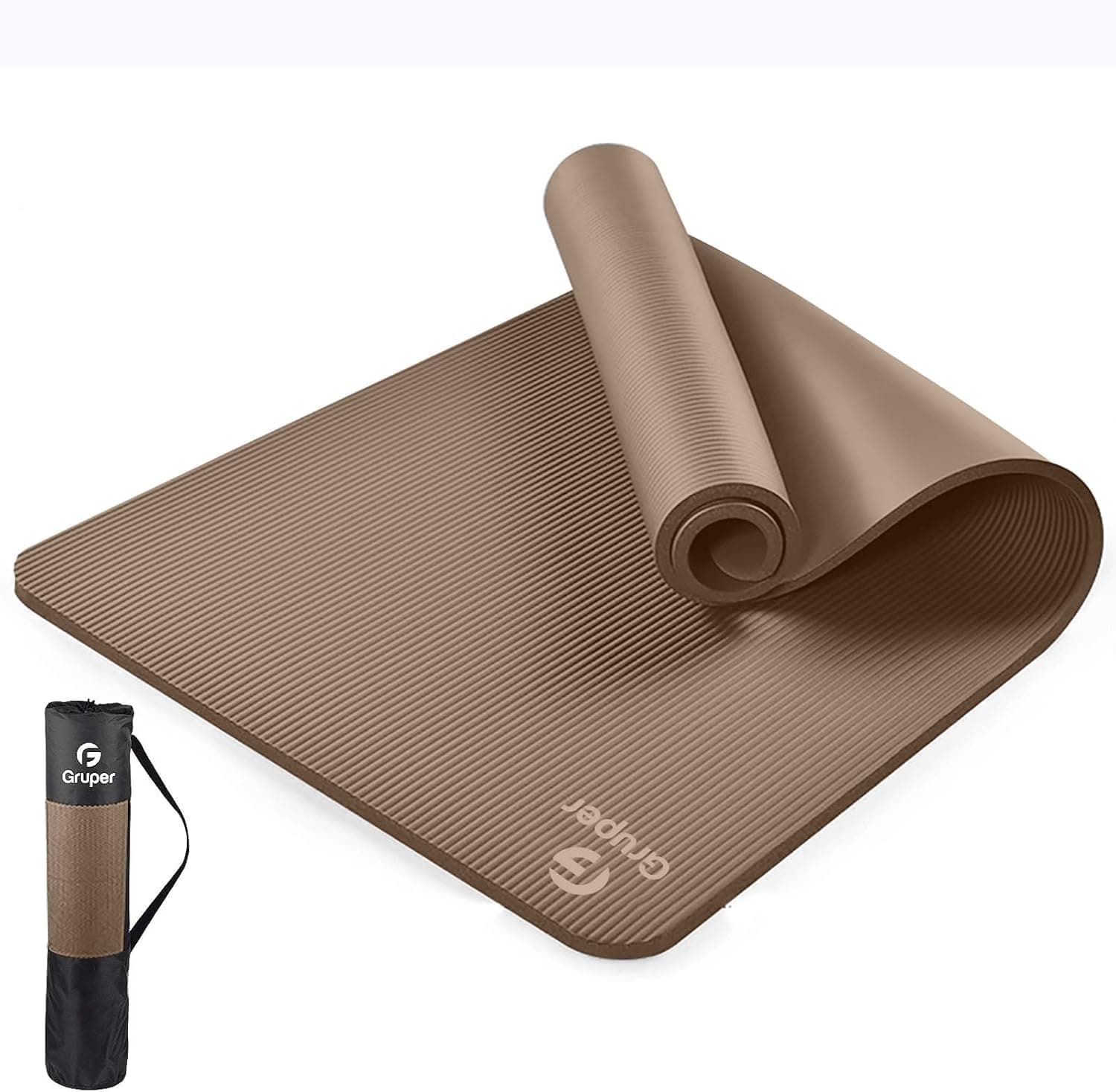
Gruper's extra thick NBR non-slip yoga mat at 72L x 32/24W x 0.6in in two width options.
Price range: $ (Budget)
What we liked
- + 0.6in NBR foam offers plush cushioning for sensitive joints
- + 32/24W width options let you pick a wider or slimmer mat
- + 72L length fits most users from head to toe
Trade-offs
- - NBR foam can stretch or tear under sharp shoes
- - Very soft surface makes standing poses less steady
Who this mat suits
This Gruper mat is built for people whose joints ache on a hard studio floor, think floor-based yoga, restorative stretching, Pilates and general home workouts where cushioning matters more than a firm, springy surface. The 72 inch length covers most adult heights from head to toe, and offering both a 32 inch and a 24 inch width means taller or broader-built users can size up while anyone tight on floor space can choose the narrower version instead of being stuck with one fixed footprint. It is less suited to people who spend most of a practice balancing on one leg or in arm-support poses, since a soft, thick mat gives less feedback and stability than a thinner, denser one. Buyers who move between a home studio and a car will also appreciate the included strap for carrying it rolled.
NBR foam and the two size options explained
The mat is made from NBR, nitrile butadiene rubber foam, a material prized for its softness and shock absorption rather than for grip or density. Gruper offers it in two configurations under the same listing, a wider 32 inch by 0.6 inch thick version and a narrower 24 inch by 0.4 inch thick version, both at 72 inches long. The thicker option gives more forgiving support for kneeling and seated stretches, while the thinner, narrower build is easier to roll small and carry. NBR is non-toxic and odorless out of the box compared with older PVC mats, which matters for anyone practicing indoors in a smaller room. The tradeoff is that NBR foam is softer than TPE or rubber, so it compresses more under concentrated pressure like a single palm or heel.
Setup, daily use and care
Unroll the mat on a flat, clean floor and give it a few minutes to lie flat before your first session, as foam mats can hold some curl from rolled storage. The non-slip surface works best on hard flooring like wood, tile or laminate rather than carpet, where the mat itself can shift. For cleaning, wipe it down with a damp cloth using cold water and a neutral, non-abrasive detergent, then let it air dry fully before rolling it up again, since trapping moisture inside a rolled foam mat can lead to a musty smell over time. The included carrying strap and bag make it simple to transport to a class or store upright in a closet rather than leaving it flat on the floor, which takes up more room.
Trade-offs and how it stacks up against rivals
In the site's thick yoga mat guide, this Gruper mat ties for the top score at 8.4 but ranks second behind the Hatha Yoga extra thick TPE mat, which uses a denser, more eco-focused material at a similar 72 by 32 inch, half-inch profile. It sits just ahead of the Gaiam premium print reversible mat at 8.1, a thinner, more style-focused option from a bigger yoga brand. Compared with the Hatha TPE mat, this NBR version trades some durability and grip for a plusher, softer feel that some users prefer for joint comfort. The main downside buyers report with NBR foam generally is that sharp shoe edges or fingernails can tear or gouge the surface more easily than firmer TPE or rubber mats, so it is not the best pick for barefoot-optional or shoe-adjacent training.
Verdict and who should choose differently
Choose this Gruper mat if plush, joint-friendly cushioning matters more to you than a firm, stable surface, and if you like having a choice between a wider or a more compact size in one listing. It is a strong fit for restorative yoga, Pilates, stretching and general floor workouts where comfort outranks precision balance. Yoga practitioners who spend a lot of time in standing balance poses or arm-support work should look at the top-ranked Hatha Yoga TPE mat instead, since its denser material offers steadier footing. Anyone training barefoot near sharp equipment or in bare feet with long nails should also handle this NBR surface carefully, as it is more prone to tearing than firmer alternatives in the same guide.
Frequently asked questions
What is the difference between the 32 inch and 24 inch versions of this mat?
They are the same 72 inch length, but the 32 inch version is 0.6 inches thick for maximum cushioning while the 24 inch version is 0.4 inches thick and easier to roll into a smaller, more portable size.
Is NBR foam durable enough for daily use?
NBR foam holds up well to normal barefoot practice, but its soft structure can stretch or tear if it is used with sharp-soled shoes or handled roughly, so it suits gentle floor work better than shoe-based training.
How do I clean this yoga mat?
Wipe it with a damp cloth using cold water and a neutral detergent, then let it fully air dry before rolling it up to avoid trapping moisture inside the foam.
How does this compare to the Gaiam reversible extra thick mat?
Both score close together in the site's guide, but this Gruper mat leans toward plush NBR cushioning while the Gaiam mat is a thinner PVC mat known more for its reversible printed designs than raw thickness.
Prices change often, so check the current price and availability on Amazon.
Check price on AmazonCompact Gym Picks may earn a commission from the link above.