Perfect Fitness Perfect Pushup Rotating Push Up Handles - Enhance Your Workout and Engage More Muscles With Ergonomic Design Review (2026)
Updated September 20, 2026 · Research-based review
Our verdict
Perfect Fitness's rotating push-up handles use a ball-bearing system that lets your wrists turn naturally through each rep, aimed at reducing wrist strain during floor pressing work. They are a long-running, well-known design, though the rotating base takes some practice and they are not built for dips or handstand training.
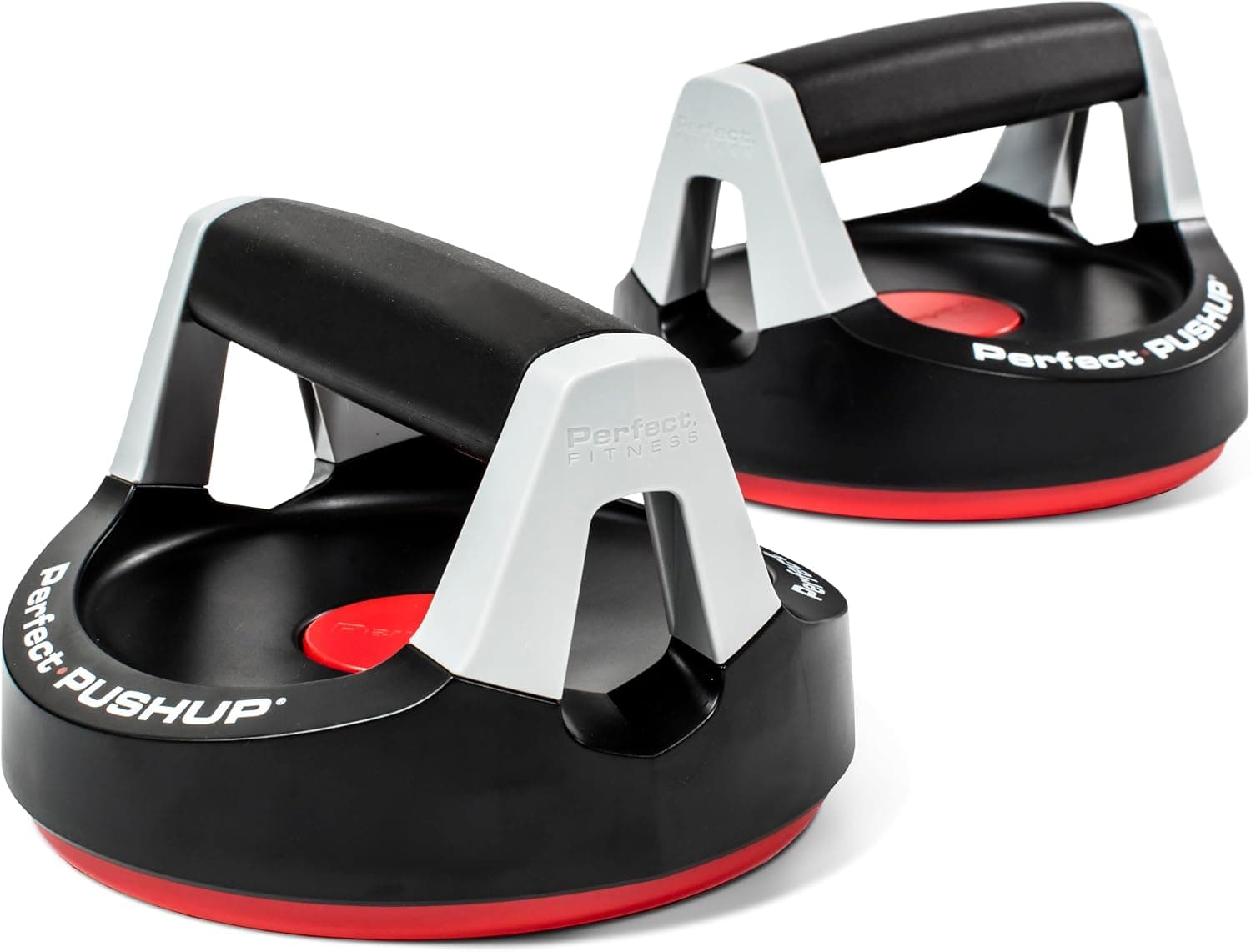
Perfect Fitness Perfect Pushup rotating push up handles, designed to engage more muscles with each rep.
Price range: See on Amazon
What we liked
- + Rotating handles follow natural wrist movement during push-ups
- + Perfect Pushup is a well-known, long-selling fitness product
- + Ergonomic design can reduce wrist strain for many users
Trade-offs
- - Rotating bases take practice to control smoothly
- - Not suitable for dips, L-sits or handstand work
How the rotating mechanism works
Each handle sits on a ball-bearing base that lets it rotate freely as you press up and down, rather than staying fixed like a traditional push-up bar. The idea, according to the manufacturer, is that your hands and wrists can follow their natural rotation path during the pressing motion instead of being locked into one angle, which is meant to reduce strain on the wrists over repeated sets. This rotating design is the core feature that separates Perfect Pushup from simple fixed handles or parallettes, and it is the reason the product has kept a consistent design language across multiple generations sold under the Perfect Fitness name.
Origins and design background
The Perfect Pushup line has circulated in fitness retail for well over a decade, with retailer listings noting it was originally developed by a former US Navy SEAL aiming to build a more ergonomic push-up tool. That background is part of why the product remains a recognizable name in push-up handles specifically, compared with newer, less established competitors selling similar rotating designs. Listings for this model describe a compact footprint per unit, with a low profile intended to sit stably on hardwood or carpet, and a non-slip base meant to keep the handles from sliding during a set, which matters most on smooth or hard flooring.
Grip comfort and base stability
The handles use a rubber grip surface over the rotating bearing housing, intended to stay comfortable across a full set of push-ups without digging into the palm the way a bare metal or hard plastic bar sometimes can. A non-slip base under each unit is meant to keep the handles planted on the floor during the up and down motion of a push-up, which matters because any lateral slide during a rep with your hands elevated on rotating handles is a bigger stability risk than it would be with your palms flat on the ground. Listings for this model describe a compact, low unit height per handle, which keeps the overall setup close to the floor and reasonably easy to store in a drawer or gym bag between sessions.
Learning curve and exercise limits
Because the handles rotate freely rather than staying locked, first-time users typically need a few sessions to get comfortable controlling the base through a full push-up, especially at the bottom of the rep where stability matters most. This is a common adjustment period for any rotating push-up tool, not unique to this model, but it is worth expecting rather than being surprised by. These handles are built specifically around the push-up motion and are not intended for dips, L-sits, or handstand training, unlike some fixed parallette-style stands that double as a base for those other bodyweight movements.
Who should buy these handles
These suit anyone who wants to add rotating, wrist-friendly push-up handles to a home bodyweight routine and is willing to spend a session or two adjusting to the rotating base. The established design and long production history give it more of a track record than newer, unproven rotating handle competitors. They are a weaker choice for anyone who wants one tool that also supports dips, L-sits, or handstand work, since the rotating bearing housing is not designed to bear weight in those positions the way a fixed parallette bar is.
Frequently asked questions
Do these handles rotate during push-ups?
Yes, each handle sits on a ball-bearing base that rotates freely to follow the natural wrist motion of a push-up.
Can these handles be used for dips or L-sits?
No, they are designed specifically for push-ups and are not built to support dips, L-sits, or handstand training.
Do the handles slip on hard floors?
The manufacturer describes a non-slip base intended to keep the handles planted during use, though flooring type can still affect grip.
Who originally designed the Perfect Pushup?
Retailer listings describe it as originally developed by a former US Navy SEAL aiming for a more ergonomic push-up design.
Prices change often, so check the current price and availability on Amazon.
Check price on AmazonCompact Gym Picks may earn a commission from the link above.