Vitalwalk Apollo 11 Max Walking Pad Treadmill Review (2026)
Updated September 14, 2026 · Research-based review
Our verdict
The Vitalwalk Apollo 11 Max is a heavier duty walking pad built for people who walk for hours during the workday and want a wider deck and stronger motor than entry level pads offer. It carries a real premium over most walking pads in this guide, so it fits committed daily walkers better than casual, occasional users.
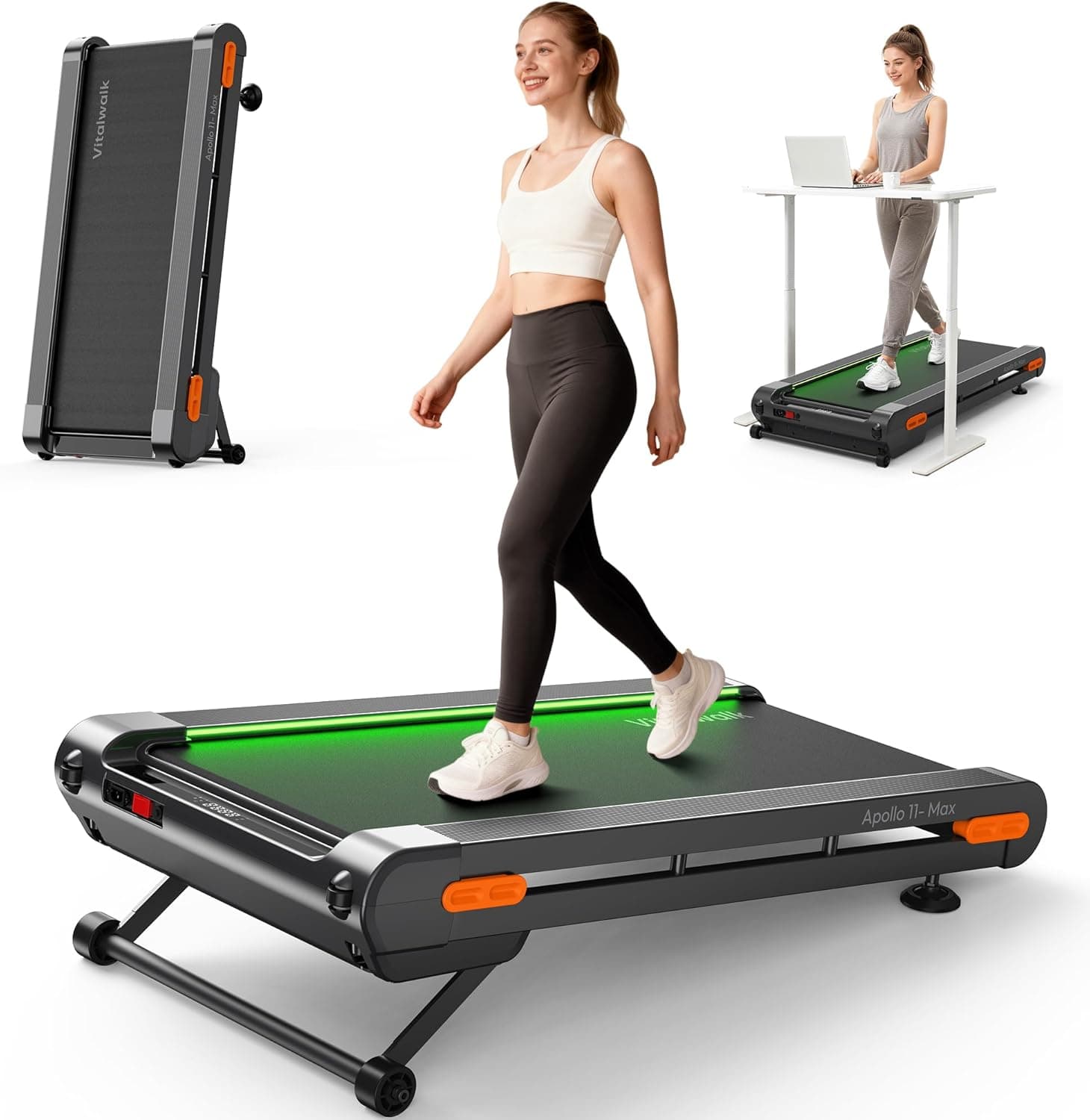
Vitalwalk's Apollo 11 Max, a premium walking pad for heavy daily use under a standing desk.
Price range: $$$ (Premium)
What we liked
- + Max tier suggests a sturdier build for long workday walking
- + Premium positioning suits users who walk for many hours each week
- + Pad design still stores flat despite the upgraded build
Trade-offs
- - Priced well above most walking pads in this guide
- - Heavier premium decks are harder to lift and slide away daily
Who the Apollo 11 Max suits
This pad targets remote workers and standing desk users who walk for long stretches most days and want equipment that can handle that volume without feeling flimsy underfoot. Its full deck design, at 18 by 43 inches of walking surface, gives more room to move naturally than the narrower belts on many budget pads, which matters for taller users or anyone who walks with a longer stride. The 3.5 horsepower brushless motor and 400 pound rated capacity point toward a machine built to run for hours at a time rather than short bursts, making it a better match for someone replacing hours of sitting with steady daily steps. It is a poor fit for anyone who only wants an occasional light walk, since lighter, cheaper pads cover that use case for meaningfully less money without leaving capability unused.
Motor, deck, and incline specifics
The Apollo 11 Max pairs a 3.5 horsepower brushless motor with speeds up to 5 miles per hour and an automatic incline system offering 20 levels up to a 20 percent grade, letting owners add intensity without changing speed. Vitalwalk lists the machine at 75 pounds and roughly 48 by 25 by 7.7 inches, with the package weighing about 86 pounds, so this is a heavier, sturdier unit than slim entry level pads, which trades some portability for durability. Cushioning comes from an 8 point internal rubber absorber system plus external rubber pads, aimed at reducing joint impact during long walking sessions. Mobility features include four multidirectional wheels and a rear grab handle for repositioning, and the deck is designed to store vertically in a slim 7.4 inch footprint when not in use, which helps in smaller home offices despite the unit's overall heft.
Setup, daily use, and app support
Vitalwalk ships the Apollo 11 Max largely pre-assembled, so setup mainly involves unboxing and positioning the pad rather than a lengthy build process. A three color speed indicator light strip gives a quick visual cue for current pace without needing to glance at a display, which is useful when the pad sits under a desk out of easy sightline. The machine connects with fitness apps including Fitshow, Kinomap, and Zwift, and syncs with services like Apple Health and Strava, letting committed walkers track mileage and calories alongside other workouts. Vitalwalk backs the machine with tiered coverage: five years on the structural frame, two years on the drive motor, and one year on other components, which is a meaningfully longer structural warranty than many budget walking pads offer and reflects the premium positioning.
Trade-offs versus other quiet cardio options
Within its own guide, the Apollo 11 Max ranks behind more affordable options like the Egofit WalkPad F1 and Merach's magnetic exercise bike, both of which score higher on value while still supporting quiet indoor use around neighbors or housemates. The core trade-off is price versus durability: this pad costs noticeably more than most walking pads in its category, which the guide's own scoring reflects with a below average value rating even though fit for the job and build quality score well. Its added weight, at 75 pounds for the machine alone, also makes it harder to lift and move daily compared to slimmer, lighter pads, so anyone who needs to frequently slide it fully out of the way should weigh that against the sturdier build.
Verdict and who should consider alternatives
Buyers who walk many hours each week and want a wider deck, stronger motor, and longer structural warranty should find the Apollo 11 Max a reasonable investment, even though our score of 6.9 out of 10 reflects real value concerns at this price point. Casual walkers, or anyone on a tighter budget, will likely get better overall value from a lighter, cheaper walking pad such as the Egofit WalkPad F1 or a quiet magnetic exercise bike, both of which appear ahead of this model in the same quiet cardio guide. Shoppers who specifically need the widest deck and longest warranty in the category, and who plan to use it daily for years, are the clearest audience for paying the premium here.
Frequently asked questions
How fast does the Apollo 11 Max go?
It runs up to 5 miles per hour, with an automatic incline system offering 20 levels up to a 20 percent grade.
How much does the walking pad weigh?
Vitalwalk lists the machine itself at about 75 pounds, with the shipping package weighing roughly 86 pounds.
What is the warranty coverage?
Vitalwalk offers tiered coverage: five years on the structural frame, two years on the drive motor, and one year on other components.
Does it work with fitness apps?
Yes. It supports Fitshow, Kinomap, and Zwift, and can sync activity data to Apple Health and Strava.
Prices change often, so check the current price and availability on Amazon.
Check price on AmazonCompact Gym Picks may earn a commission from the link above.