WalkingPad R3 Foldable Walking and Running Treadmill Review (2026)
Updated September 14, 2026 · Research-based review
Our verdict
The WalkingPad R3 is for renters and home office workers who want a treadmill that handles both walking and light running, then folds flat and disappears under a bed or sofa. Build quality and the wider belt stand out, but you pay a premium over basic walking pads for that versatility.
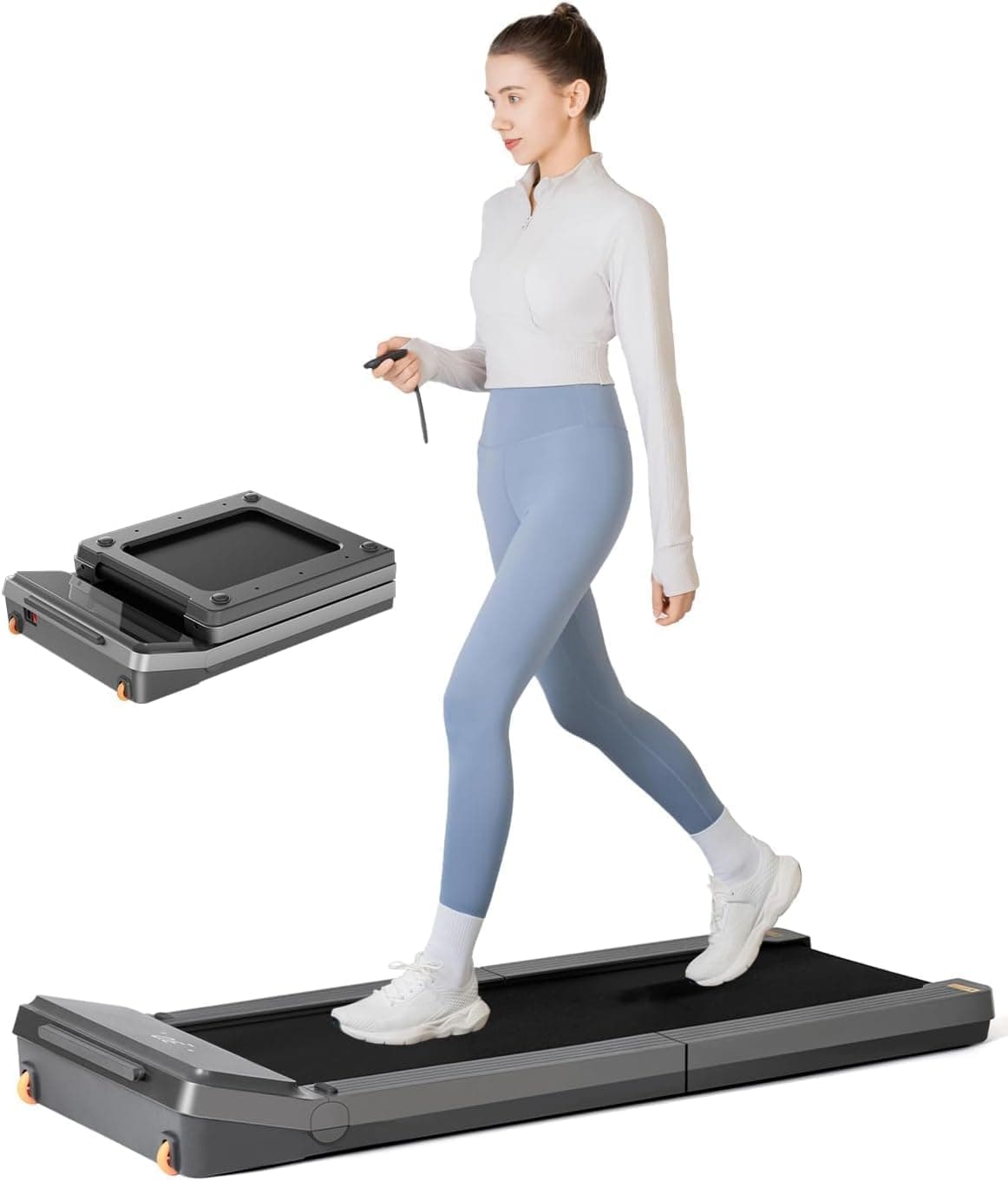
WalkingPad's R3 foldable treadmill that handles both walking and running, then folds away for small apartments.
Price range: $$$ (Premium)
What we liked
- + Supports running as well as walking, unlike many pure walking pads
- + Folding design shrinks the footprint for storage in tight apartments
- + WalkingPad pioneered the foldable pad category and has a refined design
Trade-offs
- - Costs noticeably more than basic folding walking pads
- - Running on a compact deck feels less stable than on a full-size treadmill
Who the R3 is for
The R3 targets people living in apartments or small homes who want one machine that covers both under-desk walking during work hours and a real running session later in the day. It suits buyers who have already tried a bare-bones walking pad and found the belt too narrow or the frame too flimsy for anything faster than a stroll. Because it folds in half and slides under furniture, it also fits households where floor space has to serve multiple purposes, such as a home office that becomes a workout corner in the evening. It is less suited to runners who want a full-length, shock-absorbing deck for long distance training, since compact folding treadmills prioritize storage over the cushioning and length of a traditional running treadmill. If your main goal is simply to add step count while on calls, a cheaper basic walking pad will do the same job for less money.
Design and what is inside
WalkingPad built the R3 around an aluminum alloy frame rated to support users up to 265 lbs, which is on the sturdier end for a folding pad. The belt is wider than what you find on many basic under-desk models, giving more side-to-side room so your stride feels less constrained during faster walking or light jogging. A dynamic LED light strip runs along the unit and changes as you start, pause, or adjust speed, functioning as a visual pace and status indicator rather than just decoration. Control happens two ways: a Manual mode operated through the included remote for set-it-and-forget-it pacing, and an Automatic mode that reads your position on the belt and adjusts speed as you naturally speed up or slow down. The signature fold-in-half design is patented by WalkingPad and is what lets the unit tuck away into a fraction of its running footprint.
Living with it day to day
No assembly is required out of the box, so you are walking within minutes of unpacking it. Day to day, most owners run it in Automatic mode during desk hours, letting the belt speed track their natural pace without needing to reach for the remote, then switch to Manual mode with a set speed for a dedicated cardio session. Folding it in half after use takes a few seconds, and the built-in wheels on most WalkingPad models make sliding it against a wall or under a bed manageable without straining your back. Because the deck is compact, running form should stay controlled rather than the longer stride you would use on a full-size treadmill. Basic care is the same as any belt-driven treadmill: keep it on a flat surface, avoid liquids near the motor housing, and follow the manufacturer's belt lubrication schedule to keep the motor from working harder than it needs to.
How it compares with rivals
Against budget folding options like the Goplus 2-in-1 Folding Treadmill or TrailViber Walking Pad with auto incline, the R3 costs more but backs that price with WalkingPad's original fold-in-half engineering and a wider belt built for both walking and running rather than walking alone. Cheaper rivals often add incline as their headline feature, while the R3 leans on frame quality, the wider deck, and the smart Automatic pace tracking as its differentiators. If incline training matters most to you, a rival with adjustable incline may serve that specific need better. If your priority is a treadmill that feels stable and refined switching between a slow desk-hours pace and a faster run later, the R3's more premium build is the reason to pay up.
Verdict and who should look elsewhere
The R3 earns its place for anyone who wants one folding treadmill to cover both walking and running without needing a second, larger machine, which is reflected in our score of 8.4 out of 10. It is the right call if you value WalkingPad's original folding design and a wider belt over saving money on a narrower, walking-only pad. Skip it if incline training is a must-have, since this model's strengths are belt width and folding convenience rather than terrain simulation, or if your budget is tight and a basic walking pad would cover your actual use case just as well for less money.
Frequently asked questions
Can the WalkingPad R3 handle running, not just walking?
Yes, the R3 is built to handle both walking and light running, with a wider belt than typical under-desk pads to give more room for a faster stride.
Does it need assembly?
No, it is designed to work straight out of the box with no assembly needed.
How does it fold for storage?
It uses WalkingPad's patented fold-in-half design, which shrinks its footprint so it can be stored under a bed, sofa, or desk.
What is the weight capacity?
The aluminum alloy frame supports users up to 265 lbs according to the manufacturer listing.
Prices change often, so check the current price and availability on Amazon.
Check price on AmazonCompact Gym Picks may earn a commission from the link above.