TOPOKO Pull Up Bar for Doorway, Heavy Duty Chin Up Station, Multi-Grip Adjustable Door Frame Review (2026)
Updated September 21, 2026 · Research-based review
Our verdict
TOPOKO's doorway bar is a solid pick for renters who want pull-ups, chin-ups and hanging leg raises without drilling into the frame. Foam-padded multi-grip handles and a locking width adjustment make it comfortable and stable, but like any pressure-mounted bar it needs a tightness check before every session.
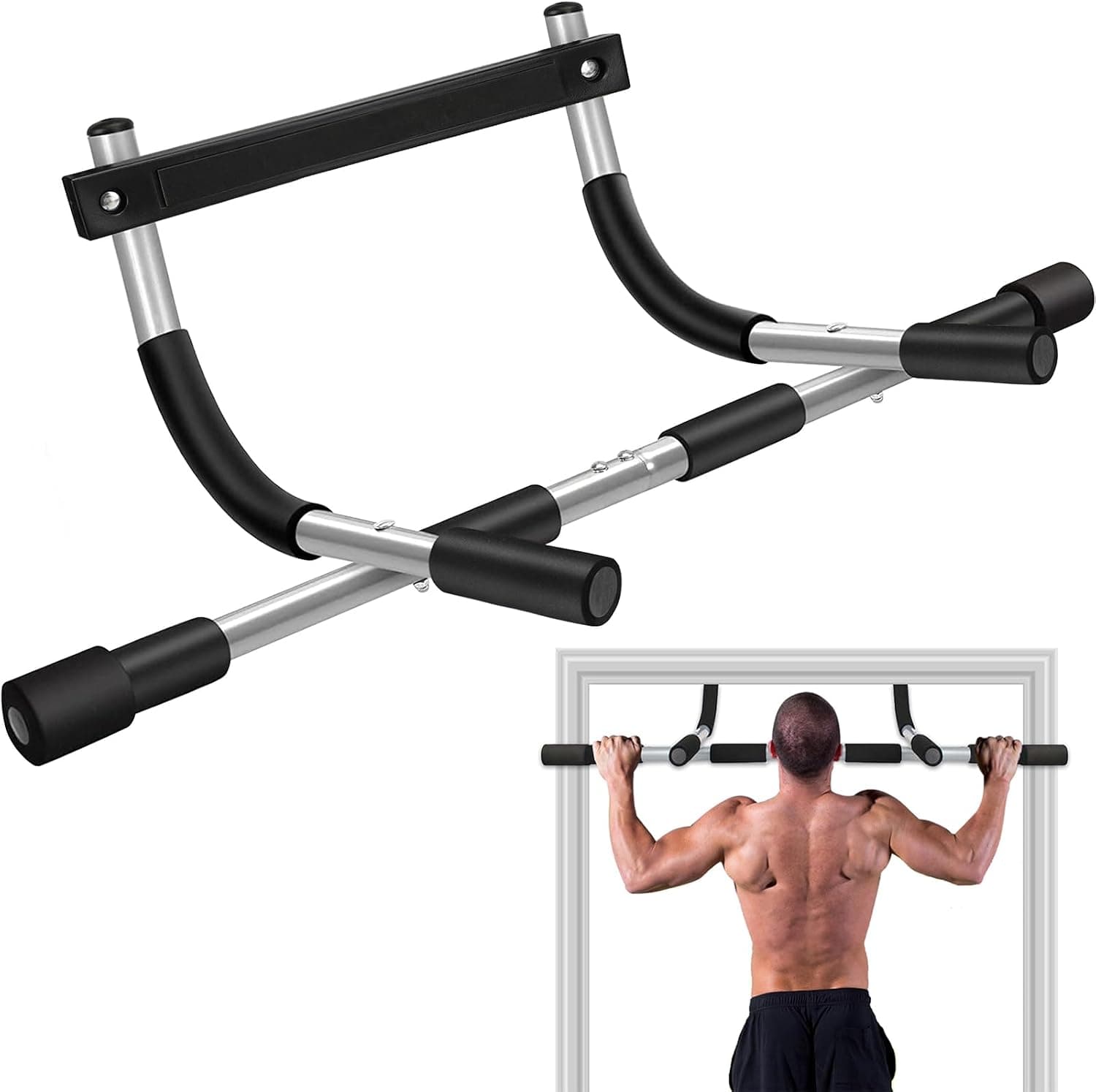
TOPOKO's heavy duty doorway pull up bar, a multi-grip adjustable chin up station for door frames.
Price range: $ (Budget)
What we liked
- + Adjustable width fits a range of standard door frames
- + Multi-grip handles support chin-ups, pull-ups and hanging leg raises
- + Heavy duty build gives a stable feel during kipping-free pulls
Trade-offs
- - Pressure-mounted bars must be checked for tightness before each use
- - Can leave marks on painted door frames over time
Fit for the job
This bar mounts across a standard doorway using pressure rather than screws, which is the main reason it suits apartments, rentals and dorm rooms where drilling into the frame is not an option. The multiple grip positions along the bar let you switch between a wide overhand grip for classic pull-ups, a narrower grip for chin-ups, and neutral or angled holds for variety, which matters if you are training more than one pulling pattern in a small space. Beyond pull-ups, the bar works for hanging leg raises, hanging knee tucks and static hangs, all useful additions to a bodyweight routine that otherwise has no way to load the lats and core through a full hang. It folds down or lifts off between sessions rather than staying mounted permanently.
Features and specs
TOPOKO lists a maximum load capacity of 440 lbs for this bar, which covers the vast majority of adult users with room to spare. The width adjusts to fit a range of standard door frame widths, and the bar uses a locking mechanism at each end rather than relying on friction alone to hold position once set. Handles are wrapped in foam padding for grip comfort during longer hangs or higher rep sets, and the contact points that press against the door frame use non-slip pads rather than bare metal or hard plastic. No tools, screws or drilling are needed for installation, so the bar can be removed and remounted in a different doorway without leaving hardware behind.
Build and materials
The frame is built from heavy duty steel tubing, which gives the bar the rigidity needed to handle repeated pull-up loading without flexing noticeably under weight. The padded foam grips cover the handle sections where hands make contact, cutting down on the cold, hard feel of bare steel during winter workouts. Where the bar presses against the door frame, non-slip pads are used to spread pressure and reduce the chance of the bar sliding or marking the paint, though any pressure-mounted bar can still leave faint impressions on painted trim over long-term use, especially on softer or older paint finishes. The locking width adjustment is the part most likely to need periodic tightening as the pads compress slightly with repeated use.
Setup and use
Installation is a matter of measuring the doorway, extending the bar to the correct width, and locking it in place before testing it with body weight from a low hang before doing full pull-ups. Because this style of bar relies on pressure rather than fasteners, it is worth rechecking that the locking mechanism is fully engaged before each workout, particularly after the bar has been removed and remounted, since a partially seated lock is the most common cause of doorway bars slipping mid-set. Door frames should be structurally sound wood or metal trim, not hollow trim pieces or decorative molding that were not built to bear load. Placing a folded towel behind the contact pads can help protect painted frames over time.
Who it is for and value
This bar suits anyone who wants pull-ups, chin-ups and hanging core work at home without installing a permanent fixture, which covers most apartment dwellers and renters. The multi-grip design gives more exercise variety than a single fixed-width bar, useful if you are training toward strict pull-ups from a mixed grip starting point. Compared with wall-mounted or ceiling-mounted bars, the trade-off is that a pressure-mounted bar depends on a suitable door frame and needs a quick safety check every time, rather than being permanently secure. For the price, the combination of a 440 lb rating, tool-free setup and padded multi-grip handles makes it a reasonable entry point into home pull-up training.
Frequently asked questions
Does this pull-up bar require any drilling or screws?
No, it mounts using pressure against the door frame with a locking width adjustment, so no screws or drilling are needed and it can be removed between uses.
Will this bar damage my door frame?
The contact points use non-slip pads to reduce sliding and marking, but pressure-mounted bars can still leave faint marks on painted trim over time, especially with frequent heavy use.
What is the weight capacity?
TOPOKO lists a maximum load capacity of 440 lbs for this bar.
What kind of door frame does it need?
It needs a structurally sound, standard-width doorway with solid wood or metal trim, not hollow decorative molding, since the bar relies on frame strength to stay in place under load.
Prices change often, so check the current price and availability on Amazon.
Check price on AmazonCompact Gym Picks may earn a commission from the link above.