The Apartment Home Gym Flooring Guide
As an Amazon Associate I earn from qualifying purchases.
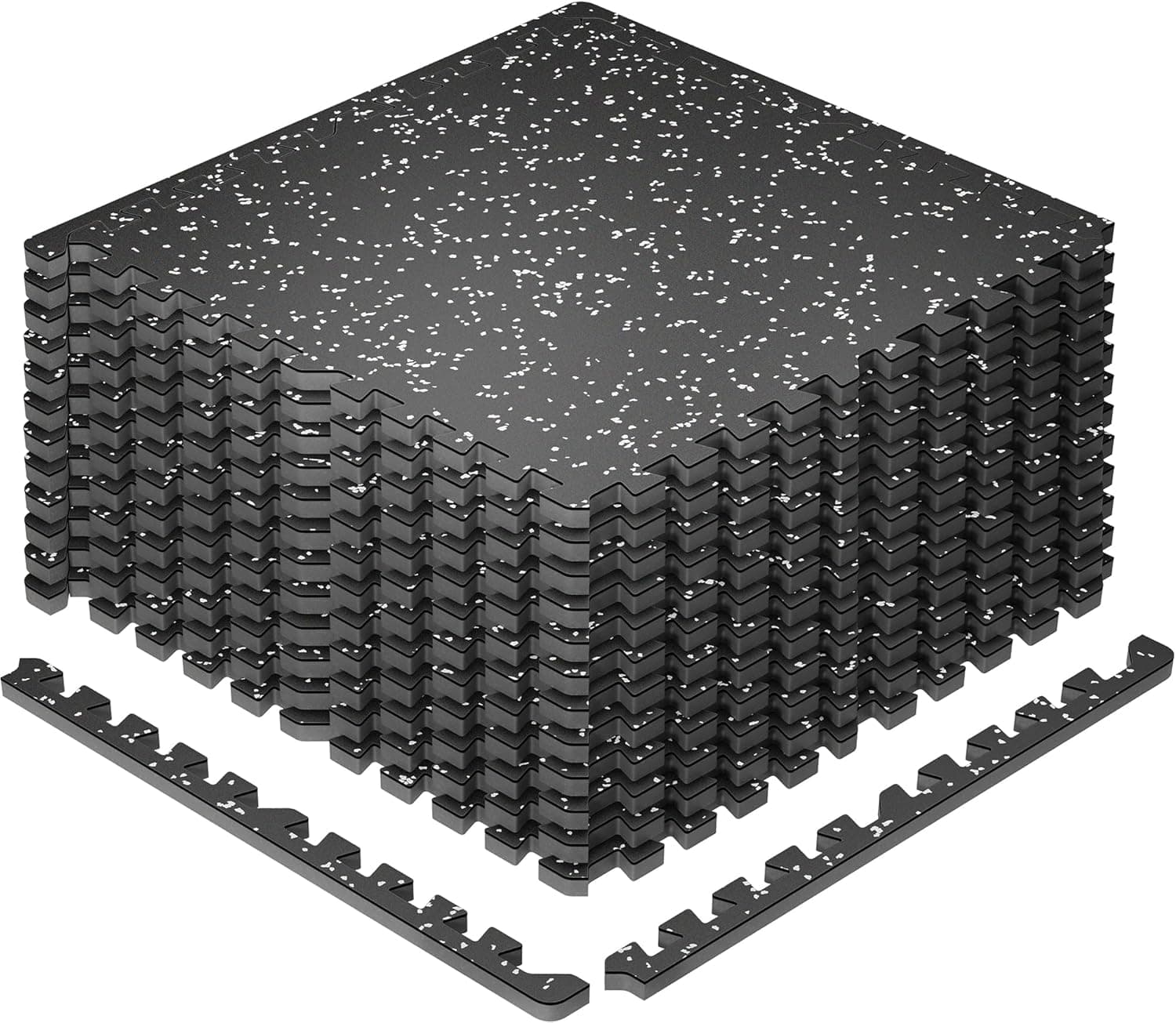
Flooring is the first thing most people skip and the first thing they regret. In an apartment your floor has two jobs, since it must protect the surface underneath and stop sound from traveling to the unit below. The right layer does both for very little money. This guide walks through mats, tiles, and layering so your gym stays quiet and your deposit stays safe.
Why Apartment Floors Need Protection
Dropped weights, rolling equipment, and constant foot pressure all leave marks on laminate, vinyl, and hardwood. A single scuff can cost more than the flooring you buy to prevent it, so a protective layer pays for itself fast.
Renters carry extra risk because damage comes straight out of the deposit. A dense floor covering spreads load, absorbs impact, and keeps dumbbell corners from denting the surface. It is the cheapest insurance in the whole setup.
Rubber Tiles vs Rolls vs Mats
Interlocking tiles suit odd corners and let you cover only the zone you train in. Rolls give a seamless surface for wider areas. Foam mats are the lightest and easiest to store, though they compress faster under heavy loads.
For most apartment gyms a mix works best. Put a firm mat under your bench or rack and lighter tiles where you stretch. Pick thickness based on the heaviest thing you plan to drop.
Layering for Noise Control
Sound travels through solid contact, so the goal is to break that path. A dense rubber base plus a softer top layer traps vibration before it reaches the joists. This matters most under cardio machines and free weights.
Even a thin foam sheet under a mat cuts the thud of footsteps and dropped plates. If you train early or late, this layering is what keeps a downstairs neighbor from ever noticing.
Covering a Stretch and Mobility Zone
Floor work needs a different surface than lifting. A thick, cushioned mat protects your spine and knees during planks, rolling, and mobility drills, and it feels far better than training on bare tile.
Keep this zone separate from your weight area if you can. A dedicated soft square means you never drag a heavy rubber tile out just to do ten minutes of stretching before bed.
Protecting Floors Under a Bench
A loaded bench concentrates weight onto four small feet, which can dent soft flooring in a single session. A firm mat underneath spreads that pressure and stops the feet from sliding during a set.
Choose a bench that folds so you can lift the mat and air the floor when you finish. Trapped moisture under a permanent setup is a slow way to ruin the surface you tried to protect.