How to Progress With Minimal Equipment
As an Amazon Associate I earn from qualifying purchases.
The biggest worry about a minimal home gym is running out of room to progress. In practice, a small kit can drive gains for a long time if you know how to make exercises harder without adding weight. This guide covers the main levers for progression, from reps and tempo to leverage and range of motion, so a few compact tools keep challenging you for months.
Progressive Overload Without More Weight
Progressive overload just means giving your body more to adapt to over time, and weight is only one way to do that. You can add reps, add sets, shorten rest, or slow the tempo, all of which increase the demand without a single extra plate.
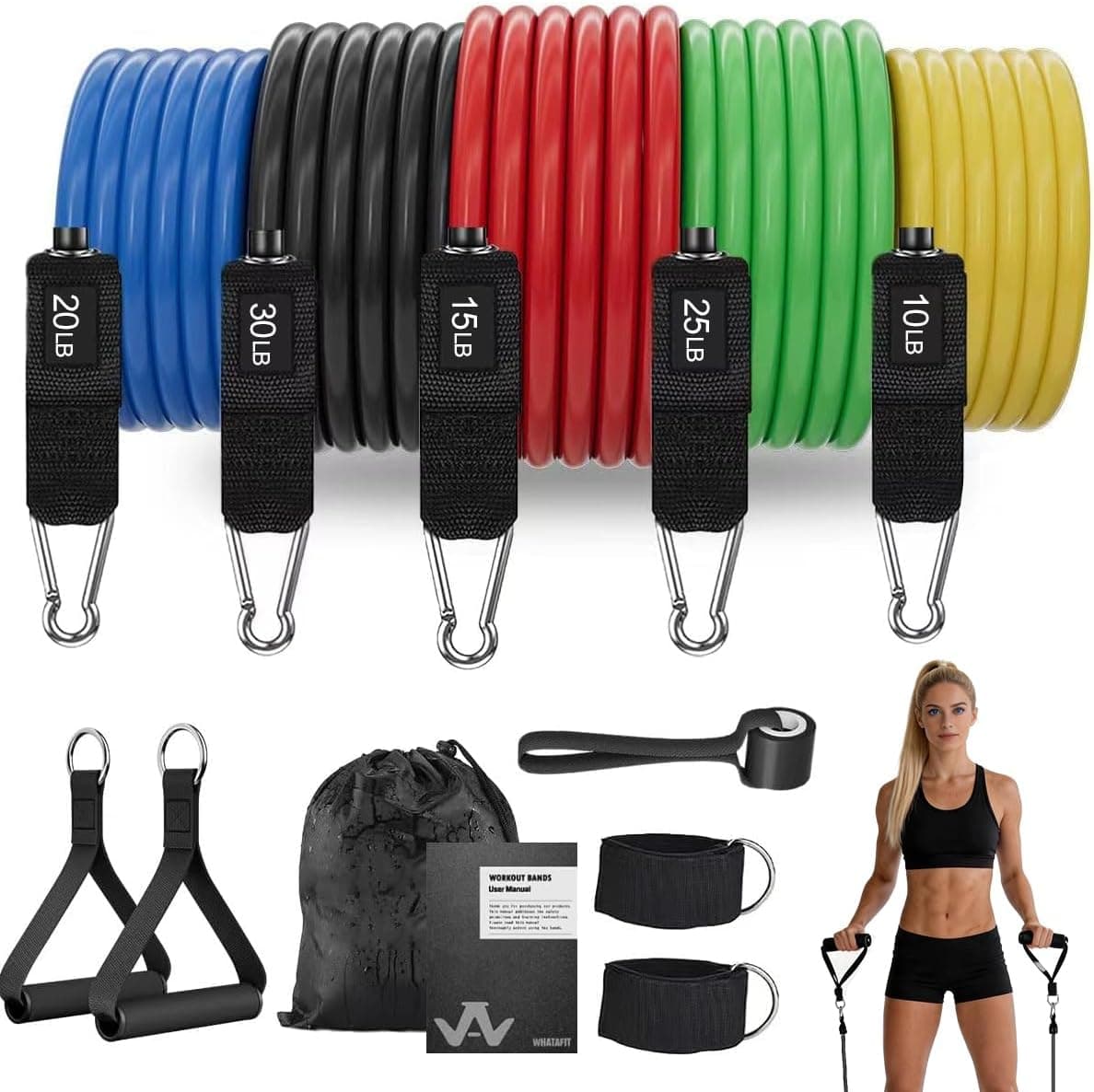
Bands are especially useful here because they let you fine-tune resistance in tiny steps. Adding a light band to a push-up or squat bumps the challenge just enough to keep progressing when your next fixed weight would be too big a jump.
Using Leverage to Add Difficulty
Changing your body angle changes how hard an exercise feels, and this is one of the most powerful tools in bodyweight training. Lowering the anchor on a row or lifting your feet on a push-up dramatically increases the load with no equipment change at all.
A suspension trainer makes these adjustments smooth and precise, since you can walk into a harder or easier position in seconds. That built-in scalability means one tool covers a beginner just starting rows and a stronger trainee grinding out steep-angle reps.
Progressing Toward Harder Skills
Bodyweight skills give you a long ladder of progressions to climb. Working from tuck holds toward extended positions on rings, for example, provides years of challenge from the same simple pair of straps.
Rings reward patient, incremental practice. Each small step, from supported holds to full movements, is its own goal, so motivation stays high even without loading up heavier and heavier weight.
Adding Load When You Are Ready
Eventually some movements do call for external weight, and this is where an adjustable tool pays off. You add small increments as you get stronger, keeping progression steady without buying and storing a whole rack.
Adjustable dumbbells fit this role perfectly in a small space. They let you nudge the weight up gradually on presses and rows, so you always have the next step available without a cluttered corner.
Recovery as a Progression Tool
Progress happens between sessions, not just during them, so recovery is part of getting stronger rather than a break from it. Managing soreness lets you train more consistently, which is what actually drives long-term gains.
A massage gun helps loosen tight muscles after demanding sessions, making it easier to return to training on schedule. Used briefly on the muscles you worked, it is a simple way to support the consistency that progression depends on.