Best Exercises for a Tiny Home Gym
As an Amazon Associate I earn from qualifying purchases.
A tiny home gym rewards movements that give you the most return for the least space and equipment. The best exercises train several muscle groups at once, scale easily, and need only a small footprint. This guide covers a compact set of movements that together cover pushing, pulling, hinging, and conditioning, along with the gear that makes each one practical at home.
Goblet Squats for the Lower Body
The goblet squat is one of the friendliest ways to load your legs at home. Holding a single weight at your chest keeps your torso upright, teaches good squat mechanics, and needs only the space you already stand in.
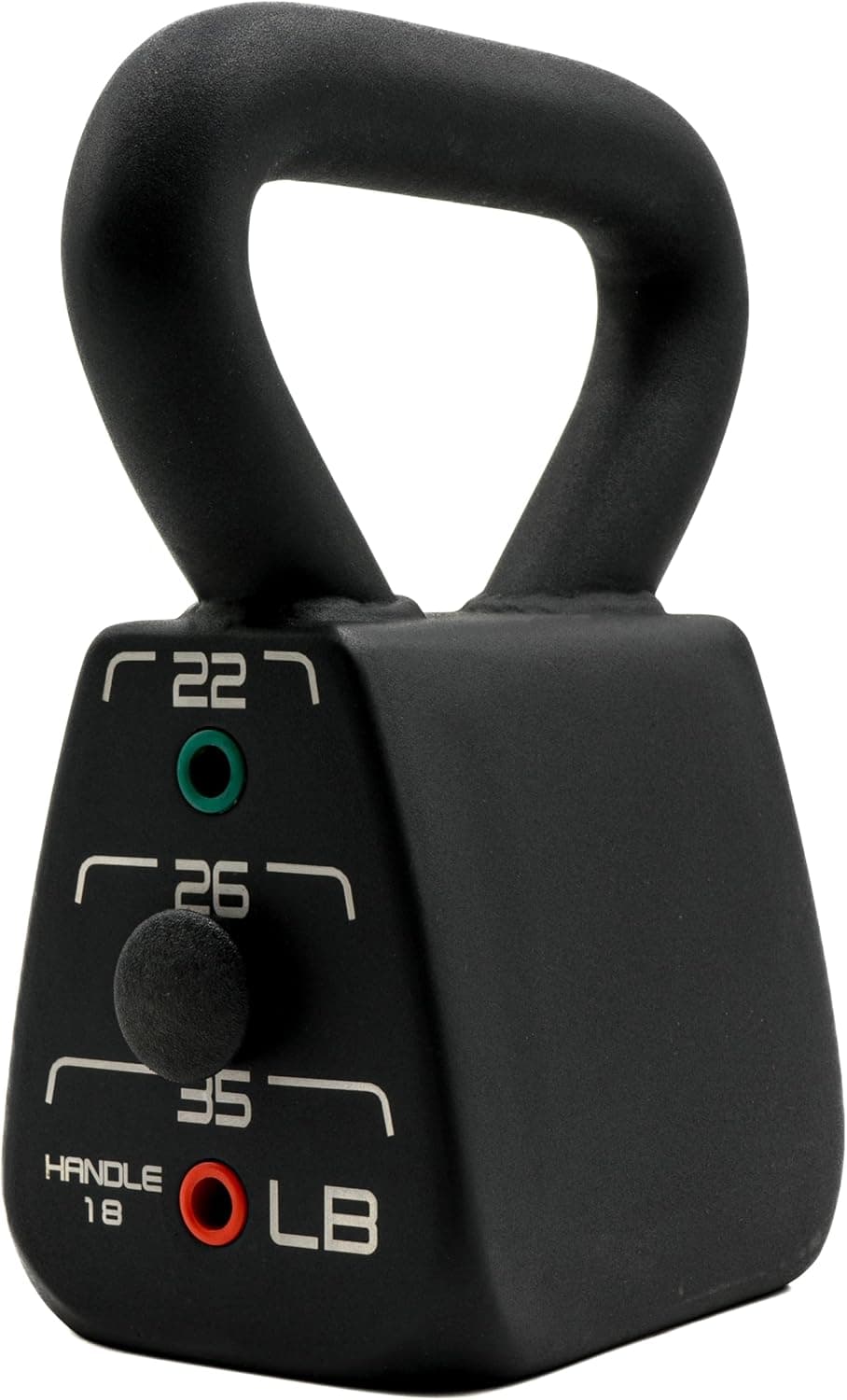
An adjustable kettlebell makes this movement scale from light warm-up sets to heavy work without a rack of separate bells. You change the load in seconds and store a whole weight range in the space of one unit.
Rows for a Strong Back
Pulling exercises balance out all the pushing most people default to, and rows are the easiest pull to set up in a small space. A suspension trainer lets you dial the difficulty simply by walking your feet forward or back, so the same tool works for beginners and stronger lifters alike.
Keep your body in a straight line, pull your shoulder blades together, and control the return. Because you set the angle, you can push close to your limit safely without a spotter or heavy loaded equipment.
Presses for the Chest and Shoulders
Pressing movements build the chest, shoulders, and triceps, and adjustable dumbbells let you train floor presses, overhead presses, and more from one compact pair. Swapping weight takes seconds, so you can move between exercises without breaking your flow.
For an apartment, the appeal is obvious: one pair covers the load range of an entire dumbbell rack while fitting on a shelf. That frees up floor space for the actual training rather than the storage.
Core Work Without a Machine
Planks, dead bugs, and hollow holds train the core hard with zero equipment and almost no space. The key is a supportive surface so you can hold positions long enough to make them count without your knees or spine protesting.
A good exercise mat defines your training zone, cushions your joints, and keeps you from sliding on hard floors. It also softens the sound of floor transitions, which your neighbors will appreciate.
Conditioning in a Small Footprint
Cardio does not require a treadmill. A jump rope delivers serious conditioning in the space of a single tile, and you can scale intensity by changing your pace or switching to more demanding footwork.
In an apartment, low ceilings and downstairs neighbors are the constraints to plan around. Choose a rope sized to your height, keep your jumps low and soft, and train over a surface that muffles the landings.