Walking Pad vs Treadmill: Which One Fits Your Apartment?
As an Amazon Associate I earn from qualifying purchases.
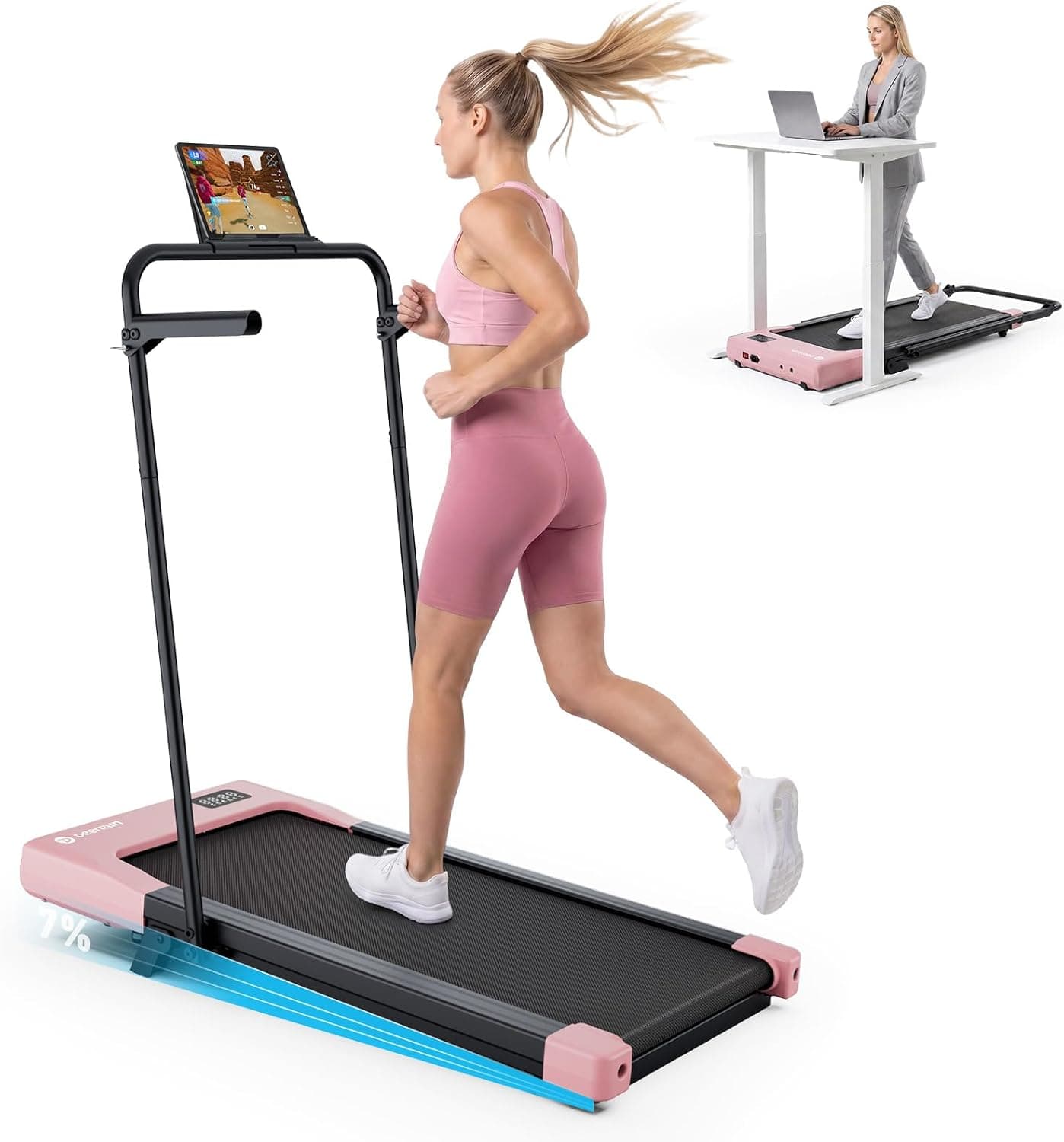
The walking pad and the folding treadmill solve different problems that happen to share a belt. A walking pad is furniture-adjacent: slim, light, remote-controlled, made to hum along at 2 mph under a standing desk and then vanish under the couch. A treadmill is exercise equipment: a handrail, a real motor, speeds that count as running, and a folded footprint you still have to look at. Picking wrong in either direction wastes a few hundred dollars, so here is the honest comparison.
The core difference: speed and safety
Walking pads top out between 3.7 and 4 mph, and that ceiling exists because there is no handrail: at jogging speeds on a handrail-free belt, a stumble has nowhere good to go. Folding treadmills run 7 to 10 mph with rails and a safety-key cutoff.
Be honest about your actual use. If the plan is steps during work calls and podcasts, the pad's ceiling is irrelevant. If the plan involves the word interval, buy the treadmill.
Size, stored and in use
A typical walking pad is about 5 to 6 inches tall and slides under sofas and beds; some premium models fold in half to stand in a closet. Folding treadmills either fold flat (the 2-in-1 style, still slim enough for under-bed storage) or fold upright into roughly five to six square feet of standing footprint.
Measure your intended storage spot before choosing: under-couch clearance decides for the pad more often than any spec sheet.
Noise, and what your neighbors hear
At equal walking speeds the machines are comparably quiet: it is footfalls, not motors, that reach the neighbors, and running transmits far more impact than walking regardless of what it happens on. A dense equipment mat helps both. If you live above someone and want daily cardio, consider whether a magnetic bike suits the building better than either belt.
The 2-in-1 middle ground
The fastest-growing category is the 2-in-1: a walking pad with a folding handrail that unlocks jogging speeds when raised. The compromise is real, with decks shorter than true treadmills and speeds that stop around 7.5 mph, but for most apartment users who mostly walk and occasionally jog, it is the practical answer.
The bottom line
Buy a walking pad if it will live under a desk and a couch and your cardio is measured in steps. Buy a folding treadmill if you will run, want a handrail, or need incline. Buy the 2-in-1 if you genuinely do both, and check our full guides either way, because the model-level differences (motor honesty, belt size, lubrication schedules) matter more than the category label.